



When people think of Detroit, they might think of the city’s reputation for auto manufacturing or Motown music—but what about comic books? Two recent exhibits at the Detroit Historical Museum showcase the city’s lesser-known influence in comic books and tabletop gaming.
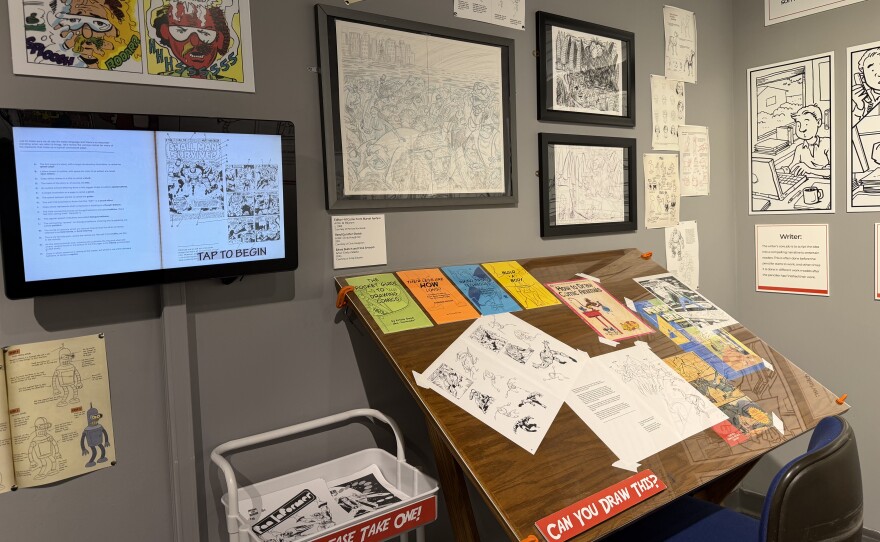
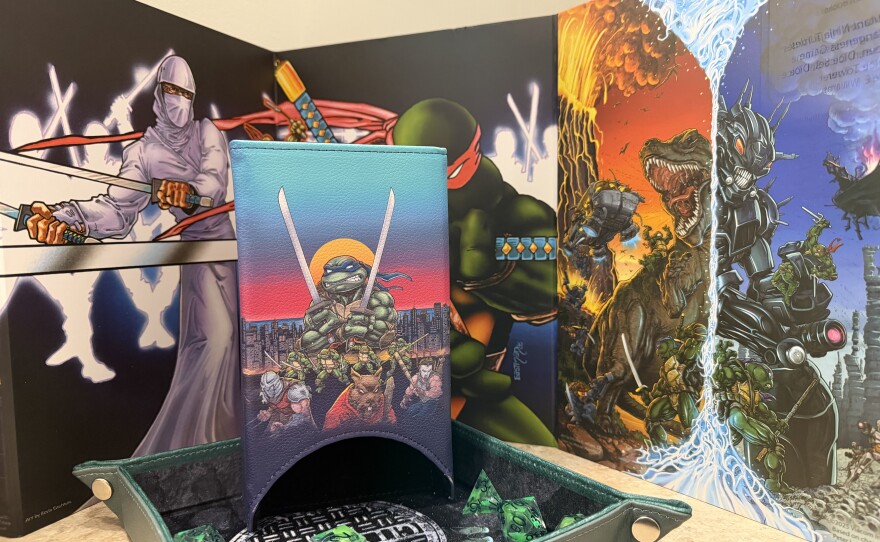
Curated by Billy Wall-Winkel, “Heroes vs. Villains” explores Detroit’s comic book history, showcasing more than 60 comic artists with ties to Michigan. The exhibit features artists like Jerry Bails, known as the “father of comic book fandom,” and Shel Dorf, the founder of San Diego Comic-Con, among others. A companion exhibit, “Worlds of Palladium,” profiles Detroit-based publisher Palladium Books, a pioneer in the tabletop roleplaying game community.
“We had folks here in Detroit that were just absolutely obsessed with science fiction and fantasy,” Wall-Winkel said. “We had folks that wanted just to convince everyone else that comics [were] a legitimate art form.”
One way that early fans of superhero comics built community was through fanzines, a cultural phenomenon that the “Heroes vs. Villains” exhibit explores. Often created from a single sheet of folded paper, zines—short for magazines—were a way to foster community in a time before the internet. The exhibit features the story of one of the first superhero comics fanzines, “Alter Ego,” created in the 1960s by Detroit-based Jerry Bails.
“The goal of it was to start conversations with other fans across the country,” Wall-Winkel said. “They started writing to the writers and artists at the different comic book companies to get snippets for their fanzines. So they got scoops, they got exclusives, because no one else [was] interviewing these comic book creators.”
The exhibit also features the work of Detroit comic artists who worked for Marvel and DC, including Jim Starlin, Rich Buckler, Keith Pollard, and many more. Wall-Winkel’s personal favorite is writer Dwayne McDuffie, who pioneered minority representation in superhero comics through Milestone Media.
“He was a tour de force in the comic book world,” Wall-Winkel said. “He created not only comic books, but also television shows that connected with an entire generation. And his shows spurred on a whole generation of creators who wanted to get into the comic book industry and help fuel this superhero bonanza that we have today.”

Wall-Winkel said the comic book and tabletop roleplaying worlds overlap significantly, which is why the two museum exhibits pair so well together.
“The way I originally pitched it was, the comic book exhibit told the story of the folks who were inspired by science fiction, fantasy, and history, and they wanted to go and write and draw about it,” Wall-Winkel explained. “And Worlds of Palladium are the folks who had the same inspiration but wanted to act it out instead.”
Palladium Books was founded in 1981 by Detroit artist Kevin Siembieda, a time when tabletop gaming surged in popularity. The publisher is most known for tabletop games like Rifts or Teenage Mutant Ninja Turtles and Other Strangeness, which was the first licensed product of Teenage Mutant Ninja Turtles.
Tabletop games like Dungeons & Dragons allow players to act out fantasy adventures together, fighting monsters while playing as their own original characters. Dungeons & Dragons, in particular, has been having a mainstream moment after featuring heavily in the Netflix series “Stranger Things,” as well as the success of its own 2023 feature film. According to Wall-Winkel, fans of video games often turn to tabletop gaming as a more expansive way to explore fantasy and science fiction worlds.
“Tabletop gaming is only inhibited by your imagination,” Wall-Winkel said. “You throw your fate in with a roll of the dice. But when you play a video game, especially in the early 2000s, there are many doors you cannot open. They will never open for you, no matter how many times you press A or press X. And as a result, people can turn or will turn to tabletop to open that door.”
“Heroes vs. Villains: Detroit’s Comic Book Story” and “Worlds of Palladium” will both display the Detroit origins of this once-niche subculture through mid-September at the Detroit Historical Society.

