

Kate Furby
Senior Environment ReporterKate Furby is Michigan Public's Senior Environmental Reporter. She has a PhD in marine biology from Scripps Oceanography, and she is a National Geographic Explorer. Furby got her start in journalism as a AAAS Mass Media Fellow with the Washington Post and has since done freelance work with National Geographic, Scientific American, and other national outlets. She's also the creator of Hot Moss—a personal Substack dedicated to her love for moss. When she's not reporting, Furby likes hiking, paddleboarding, and giving science comedy talks.
You can reach Kate with stories and other inquiries at furby@umich.edu.
-
 A new rule proposed by the White House’s Office of Management and Budget (OMB) would fundamentally change the way that federal funding is managed for scientific research — but for now, the Senate has blocked it.
 -
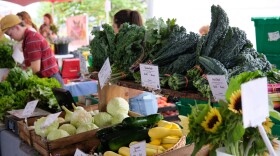 Some Michigan farms say lettuce sales are booming, as the Cyclospora outbreak wreaks havoc around the country.
 -
 The EPA is being sued this week by Elin Warn Betanzo, a water safety engineer who was also instrumental in the Flint water crisis investigation.
 -
 This weekend, peak peony blooms are predicted at the Nichols Arboretum in Ann Arbor. Scientists from the University of Michigan are using part of the peony garden as an experiment to test urine-derived fertilizer. It's called Pee for the Peonies.
 -
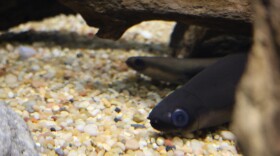 In this episode, we take a road trip through Canada, following part of the very long and arduous American eel migration, talking with people along the way and witnessing their obstacles up close.
 -
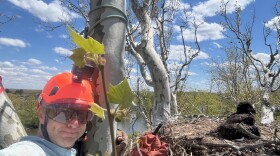 Blood is thicker than water. Scientists are using baby eagle blood to assess the health of Michigan’s environment. Because eagles are top predators, heavily linked to lakes and rivers, they provide a proxy for water quality.
 -
 Sturgeon made it through the dinosaur extinctions, all the way through Lake Erie being declared dead in the 1960s, to now. But they need our help. In this episode, we look at two restoration efforts to ensure lake sturgeon are here for future generations.
 -
 Why do you think the Great Lakes are so... well, great? We traveled to each of the lakes to discover one thing about each that makes them so special, and uncovered what environmental changes might jeopardize that greatness. Listen wherever you get your podcasts starting May 1.
 -
 The designation means the federal government will provide financial and technical help to clean up the groundwater plume.
 -
 The extreme weather conditions that are blasting the U.S. this week are a complicated blend of human-caused climate change and natural variability.


