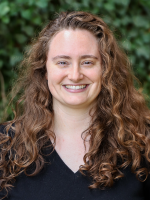
Anyone who has listened to Michigan Public in the last four-plus decades has heard something — probably many, many things — that Peg Watson produced. They’ve probably even heard Peg Watson herself.
Watson is Michigan Public’s operations manager and a frequent evening host on the air at the station.
Friday is her last day. She joined Morning Edition host Doug Tribou for a look back at her nearly 43 years at Michigan Public and some of the big changes at the station during her career.
Doug Tribou: When did you start at Michigan Public — which was then just WUOM — and why did you get into radio?
Peggy Watson: I just got to tell you, first off, after being in radio for over 50 years, this is the first time I've ever been interviewed. [Laughs] Isn't that crazy?
DT: [Laughs] That's crazy, yeah.
PW: I know! After I graduated from high school, I took a year off. I was engaged, I was going to get married and be a dental assistant because I had been doing that for quite a while. And then all of a sudden I had this like, "wow" moment. And I said, I can't do this. So I asked my dad if he'd send me to college. And he said, of course.
And I went to Henry Ford Community College in Dearborn, and they had a radio station there. And I just loved it. We were only in the student center, but I became the station manager — we got our FM license there and that was the bug — for two years. And at that point, I went up to Western Michigan University in Kalamazoo and I went to WIDR, which is still the college radio station, and I just fell in love with it.
DT: WUOM is the original station of what is now five signals for Michigan Public. It's 77 years old. You have worked here for nearly 43 of those years. The station's been through a lot of changes in that time. Which ones stand out to you as the biggest?
PW: When I started at the station, it was a classical radio station. I didn't have a clue about classical music, but I had been working [in the] television crew and one of the guys said, "Peggy, you got to go over to apply for my job. I'm leaving." He was the production assistant there. So I did, and learned about classical music, and it was great.
And then I started doing [University of Michigan] football. I had met Tom Hemingway when I was doing television. We had a little small cable television station in Ann Arbor. And we became friends. So about two years in, he said, you know, you should work with us. You know, he and Tom Slade.
DT: They did the play-by-play and the color [commentary].
PW: And we fed like 40 stations in Michigan. Everybody took our feed. And then he said, "Hey, why don't you come and do the engineering at [Michigan] stadium?" And then I did that, then I went on the road with them. So that was great. Loved it. Learned so much.
And then that went away. U of M took it and said, we can make more money. And a lot of colleges were selling their feeds at that point.
And then, about... I can't even remember the year when we changed to [all] news and that was huge. We were supposed to be horrible. Everybody thought, you know, oh, our classical audience is going to be so mad. And they were for years.
DT: Still hear about it occasionally. [Laughs]. I wasn't even here.
PW: [Laughs] I know! And everybody loved the change to NPR.
And even though things changed, for me, it's always been the same. It's always been radio. It's always been working with the team, being on the air. My job was always to help you guys do the best job you can.
DT: Sure.
PW: And I've loved that. And interns! I had an intern that taught me how to do interns, and I've had, you know, 103 interns.
"I just love working with young people. They're great. They teach you so much. I learned so much."Peggy Watson on working with more 100 interns during her 42 years at Michigan Public
DT: Including Zoe Clark, who is now, years later, our political director and is the co-host of It's Just Politics. So what did you like so much about working with students and future broadcasters? You've worked with so many of them.
PW: First off, I just love working with young people. They're great. They teach you so much. I learned so much. I was a mentor. I was a mom, I was a friend. I'm still in touch with a lot of old interns. I'd say 20 out of the 100-plus went into radio or television.
DT: So you're about to have more time on your hands. What are you going to do in your retirement?
PW: I'm just going to enjoy it. My grandson Maverick's in Washington, D.C., so I'll see him more. I want to hike. I want to be outside. I want to continue to swim, get strong. I want to just live life and be happy. That's it.
DT: So you've been planning to retire for a while. It was sort of the worst kept secret in the station [laughs] because you've been telling us you've been planning to retire for a while.
PW: [Laughs] I was really bad at that, wasn't I?
DT: But several months ago, you said something to me that really stood out to me. It was when the sort of the drumbeat of cuts to public media funding were going to happen, coming from the Trump administration.
You said, I don't want to leave right now. I want to sort of stick it out and see what happens and see how this fight plays out.
And now we're on the other side of it. The station has lost $1 million-plus in funding over two years. And we've seen our terrific audience respond in great ways over these past couple of fund drives that we have. And I just wonder what you're thinking about the state of public media as you exit after all these years and what we've seen in these last, you know, 12 months or so?
PW: Yeah, yeah, because I was going to leave in June, I think, and I just felt like I couldn't do it. I knew that we were going to have a few more fund drives. And I've always been one of the producers of the fund drive. And it was so important. I just felt like I wanted to be around a little more. More involved.
But our audience has always been great. That's one thing — the audience has always been great. And I hope that we can continue to do it. I get a little nervous about stuff, but I think that Michigan Public is pretty strong, and I'm hoping they'll be here another 50 years.
DT: Well, Peggy Watson is Michigan Public's operations manager, and she is retiring Friday after just under 43 years at the station. Peg, thanks for everything.
PW: Thank you, Doug.
Editor's notes: Some quotes in this article have been lightly edited for length and clarity. You can hear the full interview near the top of this page.