
-
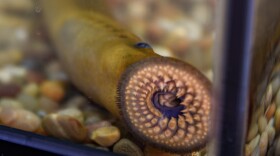 The EPA is granting more than $2 million to the Great Lakes Fishery Commission to help address the invasive sea lamprey in Michigan waters.
 -
 The Michigan Department of Environment, Great Lakes, and Energy is taking comments and has scheduled virtual meetings for the public regarding permits to build a tunnel under the Straits of Mackinac for the oil and natural gas liquids pipeline, Line 5.
 -
 Barn Sanctuary in Chelsea, Michigan wants to stand as a living model where animal welfare and ecological stewardship are not just compatible, but linked.
 -
 The Great Lakes piping plover recovery effort has been ongoing since the mid-1980s when the population got as low as a dozen nesting pairs. This year, the number reached 85 nesting pairs for the first time.
 -
 The common loon, Fe, has broken records again with the arrival of loon chicks 43 and 44. Fe is the "world's most productive" loon known to exist.
 -
 Advocates say information about the state's findings on the Wyandotte water system should have been available to the public much earlier.
 -
 Whitefish have survived and fed Michiganders for centuries. It's synonymous with Great Lakes food and Great Lakes living. But things have taken a bittersweet tone as the whitefish near collapse.
 -
 A cultural icon for Native Americans and a popular fish across the Great Lakes region is becoming harder to find as its population declines due to invasive mussels, which filter out the bottom of the food web.
 -
 NOAA is predicting the annual cyanobacterial bloom on the western end of Lake Erie will be mild to moderate this summer. Cyanobacteria is not currently detectable by satellite in western Lake Erie. But it is expected to begin forming next month.
 -
 An experimental forecasting method developed by the National Oceanic and Atmospheric Administration could help warn of approaching toxins from algal blooms in Lake Erie.

© 2026 MICHIGAN PUBLIC
91.7 Ann Arbor/Detroit 104.1 Grand Rapids
91.3 Port Huron 89.7 Lansing 91.1 Flint
Play Live Radio
Next Up:
0:00
0:00
Available On Air Stations


