

In Michigan, it’s never a bad idea to boost your relationship with auto workers — or ties to the auto industry.
Republican Mike Rogers spent 14 years in Congress, but before that he was an FBI agent and worked on cars.
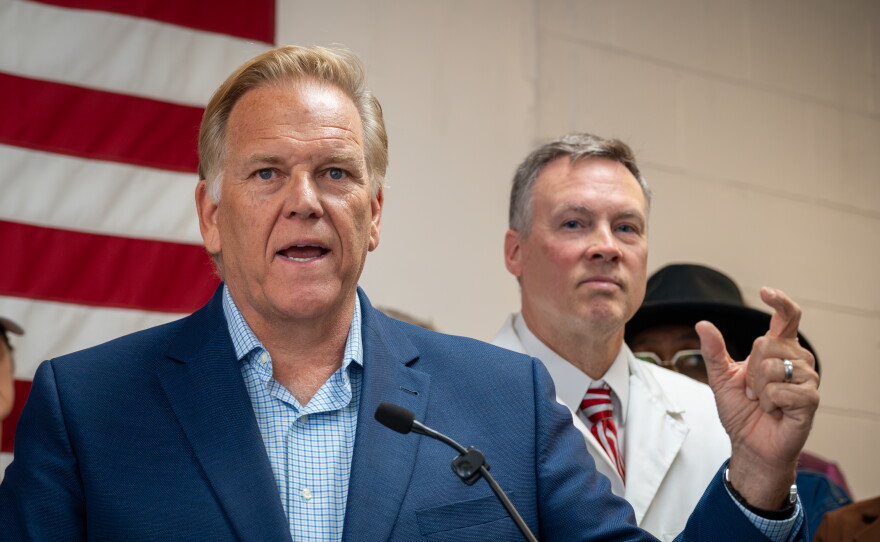
“I started out in a car factory building Chrysler LeBaron convertibles. It’s a really good car. I love that car,” Rogers told reporters in Madison Heights this week.
Rogers worked in a non-union shop in the early 1980s making modifications to already-assembled cars.
His opponent, Abdul El-Sayed, is more white collar. He holds medical and public health degrees. However, he has blue collar backing — specifically, the United Auto Workers union.
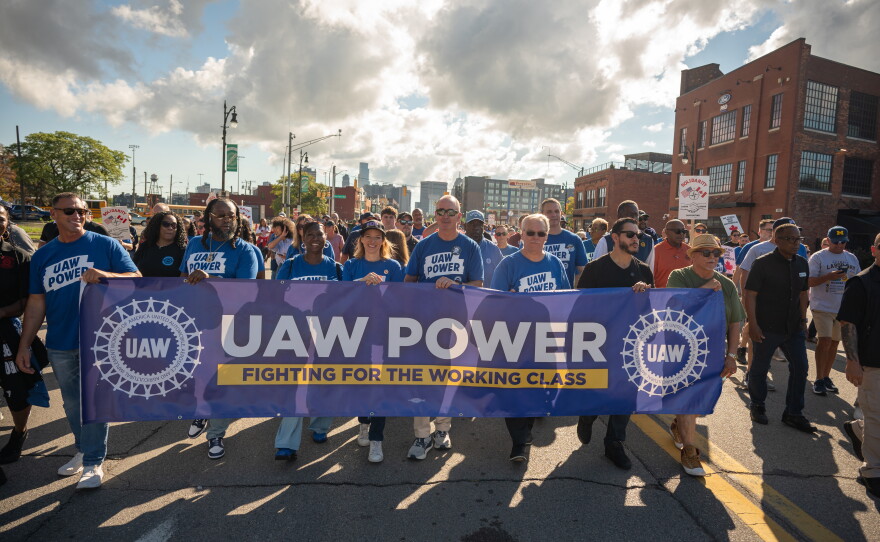
In an interview with Michigan Public Radio, UAW President Shawn Fain explained why El-Sayed is the choice for the union’s nearly 1 million current and retired members.
“We've got to elect people that give a damn about workers, and not billionaires and corporate-class people,” Fain said. “I mean, and unfortunately, our political system has been hijacked by the richest people in the world.”
Michigan’s U.S. Senate race could help decide the balance of power in Washington D.C. next year. The ongoing trade war between the U.S. and Canada is just simmering under the surface.
Fain doesn’t outwardly dislike certain taxes on imports.
“We support strategic targeted tariffs. Blanket tariffs on everything under the sun, or tariffs just to force a country to do something for political reasons? That makes no sense whatsoever,” Fain said.
“And the 50% on Canada, we don't agree with that. Like Canada is not the problem.”
The Trump administration has placed 50% tariffs on $27.6 billion in Canadian goods and materials. The Canadian government has responded with equal levies.
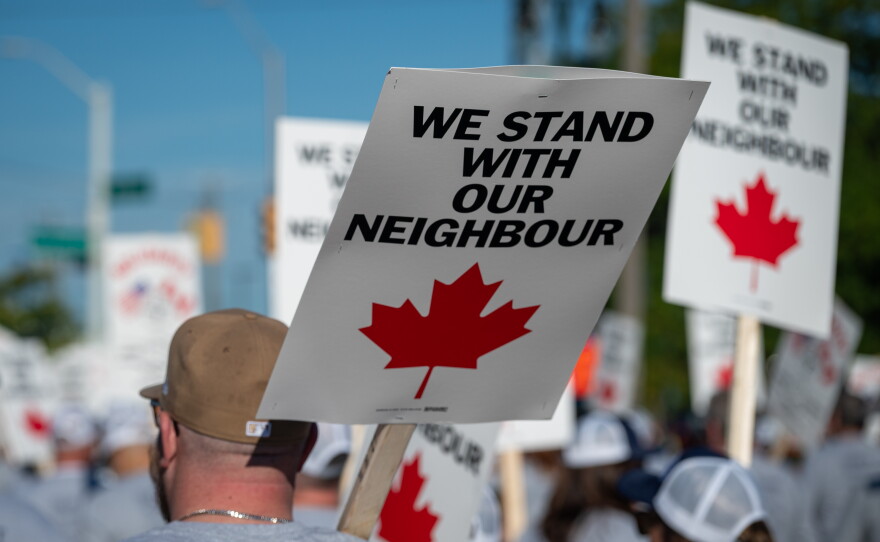
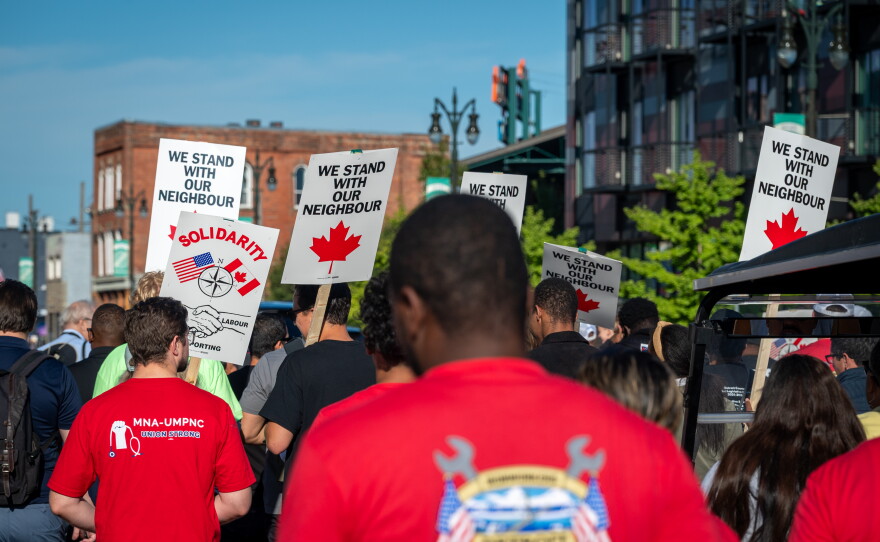
Marchers at this month’s Labor Day Parade in Detroit weren’t happy about the tariffs or how we’re treating our closest trade partner. Retired tool and dye man Stan Geis was one of many who carried a sign emblazoned with images of an American flag and the Canadian maple leaf.
The message: “Solidarity. We stand with our neighbor.”
“I liked when we had the trade across the border … with men working in our country from Canada (going) back and forth. It was good. Now it just stinks.”
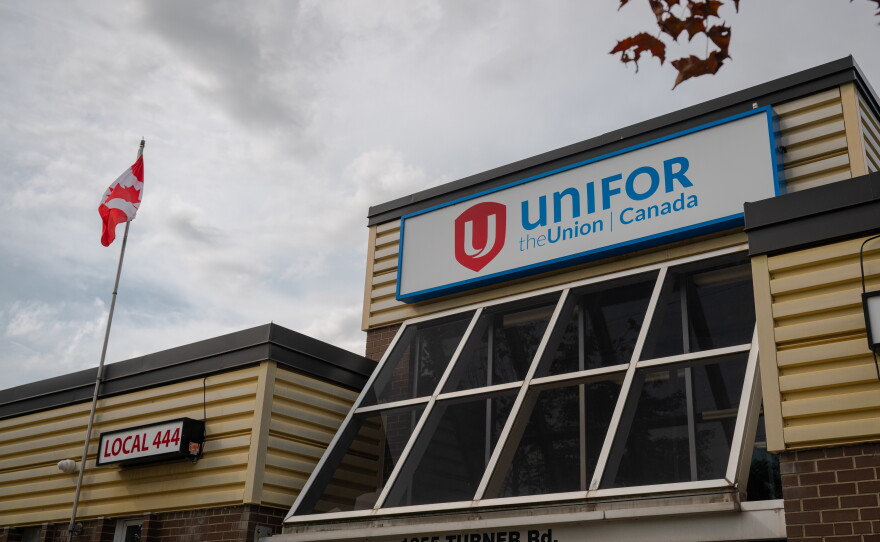
That’s not to say the relationship between the UAW and the workers of UNIFOR — the Canadian auto workers union — hasn’t hit some potholes.
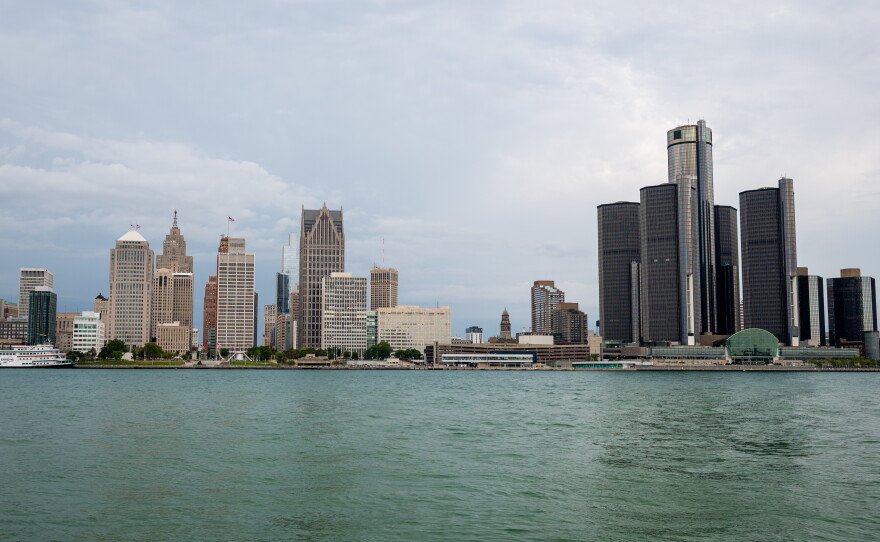
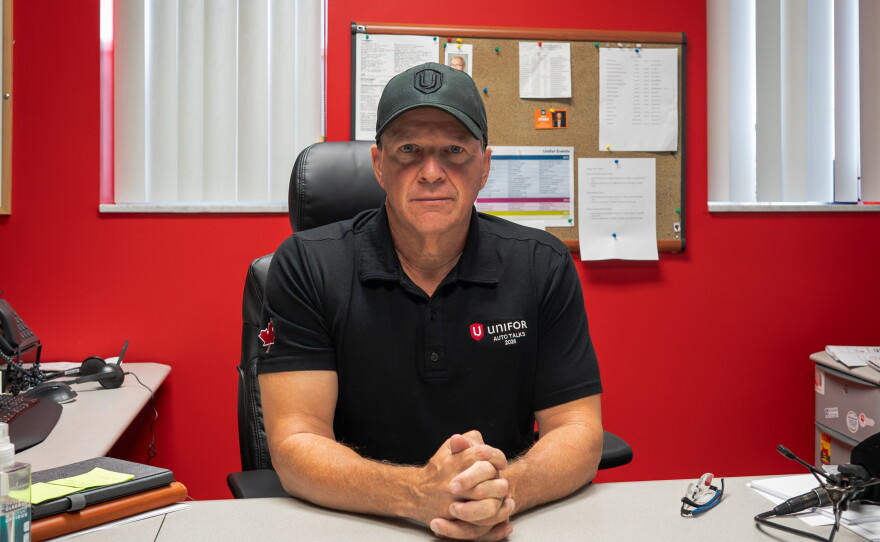
John D’Agnolo is the president of UNIFOR Local 200 across the border in Windsor. Southern Ontario is home to factories of several major automakers.
He says American autoworkers sometimes have the wrong idea.
“They think that we're taking from them when we're not.”
D’Agnolo has just wrapped up a grueling two weeks in contract negotiations with automaker Stellantis.
They’re not going well. Stellantis aims to sell an idled Jeep plant in Brampton, Ontario, to an armored car company.
D’Agnolo said the inconsistent tariffs are making the bargaining process more difficult.
“The challenge with these tariffs and not knowing what you're going to get from day to day,” D’Agnolo said. “Companies are not going to invest in new programs.”
Windsorites get all the Michigan political ads from Detroit-area TV stations. D’Agnolo said the current political climate is only fueling anxiety.
“You have to turn off the TV because you don't want to hear it because it becomes your life. It becomes now you got mental issues because you're worried,” D’Agnolo said.
“So yeah, it's horrible right now.”
In the U.S. Senate race, the two main party candidates are on opposite sides of the trade war.
El-Sayed doesn’t like that President Trump picked a fight with Canada.
“There's a way that tariffs could be used to actually protect jobs. This ain't it. Like all things Donald Trump, it is chaotic, ham-fisted, self-serving,” El-Sayed said.
El-Sayed points out that his Republican opponent was an advocate for free trade until this latest round of tariffs.
For his part, Rogers told C-SPAN this week he plans to collaborate with Trump in a way El-Sayed will not.
“I will go back to work with the president on tariffs that are working and work with the president on tariffs that are not working,” Rogers said.
“You know, my opponent, all he wants to do is fight with Trump.”
A conservative free market organization, the National Taxpayers Union Foundation — says President Trump’s tariffs are costing Michigan households an extra $5,600 per year.
That’s the third-highest in the nation behind California and Texas.
Steve Grigorian heads the influential Detroit Economic Club. He thinks that could play a role in the election.
“We're business people, but we go to the grocery store, we go to fill up our gas tank. So it's definitely top of mind. I think it will definitely be top of mind as people go to the polls”
Ballots for the November election were sent out this week. Election Day is less than six weeks away.
Copyright 2026 Michigan Public
