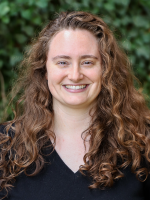
When Mary Sheffield took office last month she became the first female mayor of Detroit. Sheffield is the 76th person to hold that office. She's also the first Black woman to become mayor.
February is Black History Month and, with Sheffield's achievement in mind, Michigan Public's Morning Edition is featuring stories of other pioneering Black women in Michigan politics.
One of those women is Brenda Lawrence. In 2001, Lawrence became the first Black mayor of Southfield. She would go on to represent Michigan in Congress for eight years.
Lawrence spoke with Morning Edition host Doug Tribou.
Doug Tribou: I'd like to start by asking you about the start of your time as mayor of Southfield. What stands out to you about that first campaign and the early days when you first took office in 2001?
Brenda Lawrence: I recall one of the most memorable moments. I was at a school and a little girl walked up to me. She looked at me with that face that only a child [can make] when they're trying to put things in perspective. And she said, "You're the mayor?"
I said, "Yes, I'm the mayor."
Then she stopped and she looked at me. She said, "Then I can be mayor, too."
And I tell you, with all the pride that anyone could have, I answered, and I said, "Yes, you can, and you will even do better. I hope you'll be the first president Black woman of this country."
And that's what's so amazing about being the first: people who never see themselves represented in powerful or high positions, sometimes it limits the dreams. And the fact that Mary [Sheffield] has joined that society of being the first woman to be the mayor has generations behind her saying, I can do it too.

DT: Not too many politicians can also say they worked for the U.S. Postal Service. You were a postal employee for 30 years. Why did you decide to switch to politics for the second act of your careers?
BL: I was just raised by my grandmother teaching me that I have a responsibility to take care of my community. And in the post office, I started my career as a letter carrier. You don't get more customer service than a letter carrier where you're walking the streets and communities — daily contact with people. You learn their stories. You learn their challenges. You share in weddings and in deaths in the family.
But I started my political career while I was in the post office as a school board member. I was very much involved in my children's education and the PTA, tasted the political structure, and the community service component, and it grew from there.
DT: While in Congress, you held several important appointments. And when you left office, you were the only Michigan representative on the House Appropriations Committee. In Congress, both women and African-Americans have typically been underrepresented when compared to the population of the U.S. as a whole. Detroit is a majority Black city, but the city doesn’t have any Black representation in Congress right now. What do you think about that and about the broader issue of representation?
BL: Understand, when I was in Congress, I represented Detroit. I represented the Grosse Pointes, all of them. Southfield, Farmington Hills, West Bloomfield, Keego Harbor, Orchard Lake, Sylvan Lake, and Pontiac Lake Village. So, you think about the demographics of those communities when you're in that room, where the people who voted for you are not there, are you lifting up their concerns that may be different?
My biggest concern is that the people sitting at that table have the capacity to be inclusive in their fight for their community. I worked hard to make sure I showed up in their communities, that I sat down and talked to them, to fight for those issues that were important, and for people to have a voice. And if you look at your representative and you don't see your representative in those caucuses and in those committees where it's directly tied to your needs, to your voice, if you don't see that in your representative, you need to pick someone else.
"If you look at your representative and you don't see your representative in those caucuses and in those committees where it's directly tied to your needs ... you need to pick someone else."Former Congresswoman Brenda Lawrence
DT: Do you have any advice for Mayor Sheffield and other younger politicians on their way up?
BL: When you're the first, you are scrutinized more. The expectations are set for you to achieve faster, more. And any error or mistake, which every single human being will have, it's amplified sometimes, the criticism. But I will say to Mary Sheffield that I'm just extremely proud of her. I would say to anyone, and I've had a number of individuals that I have mentored through the years, in politics you will never, ever be without criticism. And the position is going to be hard.
They criticize our appearance. You never hear them talking about the suit that the mayor [wears], if he's a man. "Oh, that's not a good suit." But for a woman? "Why does she wear that? Why does she put her hair like that?" Just filter that out. It doesn't matter.
And you will be treated differently in meetings. And I know that Mayor Sheffield is a strong woman. We know our previous leaders said if they don't give us a seat at the table, bring a folding chair and don't even sweat it. Pull your chair up, sit down, and get to work. And I'm excited to watch her leadership and her legacy.
Editor's note: Some quotes in this article have been lightly edited for length and clarity. You can listen to the full conversation near the top of this page.