Michigan’s 2026 primary election is on August 4th. Michigan will elect a new governor this fall. In the primary, voters will choose the nominees who will appear in the November election.
As part of Michigan Public's Election 2026 coverage, Morning Edition is featuring a series of interviews with the major-party candidates for governor.
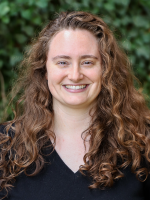
Jocelyn Benson has served as Michigan’s Secretary of State since 2019. Now, she’s also a Democratic candidate for governor. She spoke with Morning Edition host Doug Tribou.
Doug Tribou: What will your top three priorities be if you are elected governor?
Jocelyn Benson: Well, my goal as governor will be to ensure we drive down costs of everything from health care to housing to energy costs and child care; build our economy to grow wages; and protect our communities — whether it's at the ballot box when protecting democracy or protecting the safety of our schools, places of worship, and being prepared to stand up to anyone who would get in the way of that, but also work with anyone to get things done.
And I'll add, as the daughter of two public school teachers and as a former teacher myself and as a mom, it's really critical to me — to do all of these things — that we improve our public education system.
DT: In January, you also laid out your health care policy agenda, calling health care a defining issue, and you made affordability the center of that agenda. How would you make health care more affordable for Michiganders?
JB: Well, we have to, first of all, recognize that far too many families are struggling to make ends meet. And too often that means they can't pay for life-saving services. So our Department of Health and Human Services needs to be streamlined to ensure we're driving down costs and work together with hospitals and stakeholders to ensure prescription drugs, in particular, are lower and insurance is actually covering our needs.
We also need to focus on the needs of our rural communities, where you've seen far too many hospital closures drive up costs and decrease accessibility. So one of the things I've proposed is forming mobile healthcare clinics that can come to communities that are healthcare deserts and provide affordable, accessible care.
DT: You touched on this briefly there, but you have said during your campaign that to make your health plan come together MDHHS, the Department of Health and Human Services, would need to be overhauled to be brought into the modern era. That, in and of itself, sounds like a major project before having them run this major project of overhauling healthcare in the state. Is that something you're confident can happen on both ends?
JB: Yes. You know, when I came into the Secretary of State's office, many said it couldn't be done. But we actually did transform the DMV, the butt of so many jokes of government inefficiency and bureaucracy. And in just 18 months, we were able to eliminate wait times, put self-service stations in grocery stores, and move more services online to streamline how the office works.
A lot of that requires someone who knows how to run massive agencies and is accustomed to taking on big projects and modernizing systems. That's what I've done for most of my career. So I'm ready to tackle one of these biggest issues that, frankly, other states have figured out. And we can take a lot of their best practices and implement them here.
DT: As Secretary of State, your office is responsible for conducting the same election that you're running in now for governor. And in May, you announced a new firewall policy with help from the nonprofit Election Reformers Network. How is that firewall different from the way you recused yourself during your re-election campaign for secretary of state in 2022?
JB: It's actually not. It's the same way that we ensured when I was a candidate for office in the past for re-election, that we had a separation between any election related decisions and my work elsewhere in the department. What we've done differently really is just more effectively and openly talk about those firewalls so that people can have that rightly placed faith.
DT: One of the most hotly contested topics in Michigan and across the country right now is the construction of large-scale data centers. If elected governor, how would you approach data center projects and potential legislation about them?
JB: So I've released a data center guardrail plan to ensure this transformation delivers prosperity and affordability. And I have called for a moratorium to be in place to ensure we are taking our time in evaluating how we, as Michigan, want to take our opportunity to do this right.
Any new corporation that's bringing jobs to a community has to be responsible for our environment, our water, our energy rates, and the people we serve.
DT: Where do you see the power to decide in the ongoing push-pull between state and local control? It's one of the recurring themes of my time here over the past decade in news stories we cover, not just related to data centers, but related to many topics. Where is the line, in your mind, related to data centers on who really has that final say?
JB: I think the local residents. I'm not just talking about whether they want any corporation to come to their community, but also investing in engaging in community-benefit agreements and negotiations to ensure if a corporation were to come to a community, that they could be a part of being responsible in investing in better infrastructure and other things to improve communities.
DT: You touched on employment earlier, and we've seen a lot of debate over what the state should or should not do to help attract and keep businesses in Michigan. One major point of contention is the Michigan Economic Development Corporation and its taxpayer-funded spending on private businesses. In your view, what does Michigan need to do to develop and maintain high-quality, high-paying jobs?
JB: The bottom line for me is that we can be the economic engine of the Midwest here in Michigan if we diversify our economy, and we do that through investing in small business growth and development. The other thing we need to do to diversify our economy and attract new jobs to this state is invest in our workforce. That's why public education that prepares our young people for the jobs of tomorrow is critical. It's going to take far more than tax breaks or incentives to bring jobs to Michigan. It's all about workforce development and talent retention and creation. That's what I want to invest in as governor.
DT: Do you think the tax breaks and incentives should continue, though, as they've been going on over the last several years and beyond?
JB: I think we need to be serious and transparent about the return on investment of those incentives to ensure the money we're putting in to bring jobs to Michigan is actually returning on our investment and creating those jobs. Right now, we just put the money into those job creators, and we don't necessarily have a method of seeking accountability to whether or not those jobs are created. I would like to ensure we have accountability before any more funds get spent.
DT: Governor Whitmer is term-limited after her eight years in office, and you've been in your current role as Secretary of State for those same eight years. You're both prominent Democrats and have some overlap in your policy priorities. Where do you differ with Governor Whitmer on policy?
JB: Governor Whitmer is an incredible policy maker. She came up through the Legislature and is very adept at making great policy. My skill set is as an administrator. So one of the things I will do differently and bring to the table is a background in running state government well and taking a lot of antiquated bureaucratic systems that, frankly, also involve a lot of wasteful spending, and transforming those as well. What that can do is actually lower costs for our citizens. That's what I bring to the table as governor.
Editor's note: Some quotes in this article have been lightly edited for length and clarity.