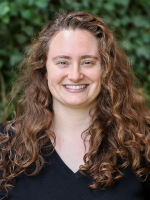
In November's midterm election, Michigan voters will choose a new attorney general. The state’s current attorney general, Dana Nessel, is term-limited.
Here at Michigan Public, we’re bringing you interviews with the candidates.
Jason Dye is the Libertarian Party of Michigan nominee. He’s the founder of We The People News, an online platform.
He spoke with Morning Edition producer Caoilinn Goss.
Caoilinn Goss: What made you decide to run for state attorney general?
Jason Dye: Well, I've memorized a good part of the Bill of Rights and Constitution, and Anthony refused, you know, PAC (Political Action Committee) money and pretty much, you know, got kicked out of the Republican Party, if you say that way.
CG: To be clear, can you tell us who Anthony is?
JD: Anthony Hudson's running for governor. He was on the Republican side, and now he is on the Libertarian side. And he said, with all your knowledge, you need to run for something. And I looked and the attorney general spot was open. I asked the question, you got to be an attorney to be the attorney general? And the answer was no. And here we go.
CG: Under state law, neither the state constitution nor state statutes explicitly state that someone must be a member of the Michigan bar to serve as attorney general. However, there is a case from 1937 where the Supreme Court of Michigan held that the bar membership requirement should be implied by the name and the nature of the office. With that in mind, what was the party's strategy in nominating you as you understand it?
JD: We went to convention and the people just nominated me. But as to what you're saying according to the bar and their little statutes and their rules, this is what I read: It's called the supreme law of the land, the Supremacy Clause. "This Constitution and the laws of the United States, which shall be made in pursuance thereof. So all laws got to be made in pursuance of the United States Constitution.
"And all treaties made, or which shall be made under the authority of the United States, shall be the supreme law of the land, and judges in every state shall be bound thereby." So what binds the judges? The Bar Association? No. I want to get rid of the Bar Association, too. I also want to get rid of qualified immunity. They're both weaponized, and they're both used against the people.
CG: So let's say you do win and you do take office. How have your experiences in the past, whether it's running We the People News or elsewhere, prepared you for this statewide office managing a large team of attorneys?
JD: Oh, I'm very good at quarterbacking and putting the right people in the right places. And if you look at my platform, I am 1,000% against data centers, Flock cameras, big corporations, so on and so forth. And I have advocated in the courts way before I did We the People News and social media. I didn't plan on running, to be honest with you, for anything. We the People News was going to be unbiased and check everybody's record pretty much. Kind of like the Gander does, but zero unbiased.
And my assistant attorney general, his name is Michael Komorn out of Southfield. He is an absolute beast. That's who would be representing the state in court. But you can't take my right and convert it into a privilege and try to regulate it with license and or fees, hence the right to work, you know. So there's going to be big arguments coming. I'm also good friends with Thomas Howell, who's running for Supreme Court justice, where the state does say you have to be a bar attorney and he's not a bar attorney. Every time you screw over we the people or you rip us off, you take somebody's inheritance, you don't do nothing but make soldiers for the cause.
CG: Would you plan to continue running your website if elected?
JD: I don't know. I never actually thought about that. You're the first person to ask me that. And I don't necessarily kind of run the website, as you would say. I just kind of put my content on there. And there's a couple other people that put content on there. So I don't know, maybe I'd let the website go, I don't know, I like it, I think it's a good tool.
The big media corporations, you're not going to tell me they don't handpick their stories. You've watched, you know, where they've had like, what is it, 40, 50 different anchors all in unison. You know what I mean? On your TV saying the same thing, showing you how things are scripted. That was the part of WTPN. We never wanted to be scripted, and we wanted to tell you the whole truth and nothing but the truth. You know?
CG: What would your top priorities be if elected?
JD: Top priorities if elected? Well, Restore the republic is one of my things. And everybody thinks that means, you know, completely destroy the [government]. No, you don't completely destroy the government. You restore it. So you get rid of all the corruption. You hold them accountable. Nobody holds them accountable.
As an attorney general, you're supposed to go on behalf of we the people. So data centers that erode my water, farmland. Same thing with Flock cameras. It's an egregious violation of your Fourth and First Amendment constitutional rights. And I'm done with it. And all I've witnessed in these courts, if you have money and you have connections, you can get away with anything you want to get away with, pretty much. And if you don't, you ain't going to get away with something you shouldn't even be in there for in the first place.
CG: You're clearly very passionate about your ideals, and you have ideas of what to change. Why go the route of running for attorney general? Why not run for the state legislature?
JD: The attorney general can really go hard for we the people, you know. For instance, do you know how goofy qualified immunity actually is? Qualified immunity is only supposed to protect civil. Let's get real. It protects both. I've heard it. It's crazy. There's no Constitution training period, for we the people in the schools. And you wonder why we're in the shape that we're in if we just simply go back to this, which is all the rights for we the people and checks and balances for the government, this nation should fix itself overnight.
So, can Jason Dye take office?
After speaking with Jason Dye, I reached out to some experts to clarify whether or not Dye was qualified to take office.
In an email, a spokesperson for the Secretary of State's office said, "I am not aware of language in the Michigan Constitution or Michigan election law that mandates the attorney general be a licensed attorney."
While Dye can legally run for the office of State Attorney General, and his name does appear on the ballot, according to University of Detroit Mercy Law professor Aman McLeod, there is a precedent set by the Michigan Supreme Court in 1937 that would likely prevent him from serving if elected.
"There is a case called Attorney General ex Rel Cook versus O'Neill, in which the Michigan Supreme Court had the opportunity to opine on this exact issue. It did say in that case that the very name of the office implies the qualification of being an attorney at law," McLeod said. "So it would seem, you know, under this theory, a court would likely say that only an attorney could be the attorney general."
I asked McLeod what would happen if Dye or another non-attorney were to win the election.
"I suspect that what would happen is that there would be a quo warranto suit, which is a suit to challenge the qualifications of somebody to hold office. And then the courts would have to rule on whether or not this person was qualified to hold office," McLeod said.
"If they were not, if they had already been sworn in, then the office would be vacated," he said. "If they had not been, then perhaps the person who got the second most votes would take the office, or the office would be declared vacated, and then the the governor would appoint somebody."
Editor's note: Quotes in this article have been edited for length and clarity. You can play the full audio of this interview near the top of this page.