“Because electronic music started in Detroit, how did that influence Detroit’s music landscape? And are there any connections to Motown and other music history from the city that influenced it?”
That question came to On Hand from listener Isabel Doades, who is curious about the connections between Detroit’s musical past and the development of electronic music.
There’s one part of the question to clear up first: electronic music didn’t start in Detroit. Recordings made entirely with synthesized sounds date back to the early 1950s.
What Detroit created was techno.
Techno emerged in Detroit in the early 1980s, with Juan Atkins, Derrick May, and Kevin Saunderson — the group that became known as the Belleville Three — among its earliest artists.
Drum machines, synthesizers, and sequencers were central to the music. So were programmed rhythms, repetition, and the ability to build a track by adding, removing, and changing layers of sound.
But what were those Detroit musicians listening to before techno existed? And what from the city’s musical culture made its way into the new sound?
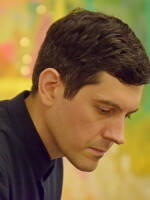
We asked Carl Craig.
Craig is part of techno’s second wave, the generation that followed the genre’s earliest pioneers. He grew up in Detroit as the music was developing and later became one of techno’s major producers and DJs.
“I grew up in the best time of music,” Craig told On Hand host April Baer.
What Detroit sounded like before techno
Craig remembers a Detroit music scene in the 1970s and early 1980s that crossed genres.
There was jazz and jazz-funk from musicians like Marcus Belgrave and Wendell Harrison. He remembers Ramsey Lewis and Earth, Wind & Fire’s “Sun Goddess,” disco records from Dennis Coffey and C.J. & Co., and music from Parliament-Funkadelic and Prince.
There was also post-punk and new wave: the B-52s, Lene Lovich and others. And there was Kraftwerk, the German electronic group whose 1981 album Computer World had, as Craig put it, “a huge grip on the city.”
A lot of that music met in one place: Detroit radio.
Craig points in particular to the Electrifying Mojo, the influential Detroit DJ whose playlists regularly crossed boundaries between funk, rock, new wave and electronic music.
“My education, outside of being a guitarist, for synthesis and stuff, was listening to Electrifying Mojo,” Craig said.
“What we all had in common was that we all listened to Mojo, and we were all influenced by Mojo.”
Craig called it “the development of techno university right there.”
What the technology changed
Craig was also fascinated by the sounds musicians could get from synthesizers and drum machines.
Electronic instruments changed how music could be made and how one could approach it. Craig compared some of the attitude behind early techno to punk, where technical training wasn’t necessarily a prerequisite for creating something original.
Craig had experience playing guitar. Other musicians around him approached synthesizers and drum machines without the same kind of instrumental background.
Craig remembers sitting on the floor surrounded by synthesizers and drum machines, experimenting with what they could do.
Those instruments offered, in his words, “almost unlimited potential.”
How techno changed Detroit
As techno developed, the scene around the music changed, too.
Craig remembers warehouse parties drawing thousands of people to parts of Detroit where he otherwise might not have gone. The crowds were different, too.
“We were seeing the type of people that we really weren’t used to seeing in Detroit coming out for parties,” Craig said.
Clubs also gave the growing scene a place to gather. Craig pointed to the Music Institute, where May and Saunderson were among the DJs, as an important meeting place for young Detroiters who came to dance and hear the music.
But Craig said one of the biggest shifts came in 2000, with the first Detroit Electronic Music Festival at Hart Plaza.
For an entire weekend, electronic music was free and out in the open, giving people across the city a chance to experience a scene that had largely grown through clubs, parties and underground spaces.
“It wasn’t just something that you had to pay a ticket to get into,” Craig said. “It was something that you had the whole weekend to go back and forth and be able to really find out about the music.”
Craig said the festival introduced Detroit electronic music to a much broader cross-section of the city — not only people already going to parties, but people who may not have encountered the music before.
Hear the full conversation with Carl Craig in this episode of On Hand.