-
 The $800,000 pilot project will allow the removal of the mats with researchers studying what happens after.
 -
 Harmful algal blooms make water unsafe to drink and swim in. Here's how farmers and residents can help preserve Michigan's water.
 -
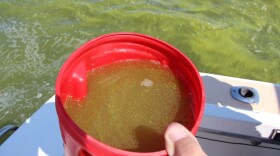 Michigan's environment department has a new online form that people can use to report suspected harmful algal blooms — usually bright green patches of lake water.
 -
 We learned about the increase in measles cases in Windsor, an invasive species from the Great Lakes wreaking havoc in Japan, what’s behind the “muck” in Lake St. Clair, how wealth inequality destabilizes the world, and indigenous traditions for harvesting wild rice in Michigan.
 -
 NOAA is predicting the annual cyanobacterial bloom on the western end of Lake Erie will be mild to moderate this summer. Cyanobacteria is not currently detectable by satellite in western Lake Erie. But it is expected to begin forming next month.
 -
 A federal district judge has approved the Ohio EPA's request to be added as a defendant in a lawsuit alleging that the Ohio EPA and the U.S. EPA devised a defective program to control phosphorus flowing into Lake Erie, a chief cause of harmful cyanobacterial blooms in the Great Lake.
 -
 Public Health Muskegon County warned of the toxins in Muskegon Lake, but found no evidence of them at Pere Marquette beach, a popular spot on Lake Michigan.
 -
 Today, the dangers that remain in Lake Erie, 10 years after a water crisis in Toledo made the water undrinkable for three days. Also, Traverse City voters prepare to decide on a nearly $200 million bond measure to improve energy efficiency for their schools. Plus, in case you missed it, highlights and hot takes on hot political races from our Issues & Ale event in Lansing this week.
 -
 It's been 10 years since Toledo issued a "do not drink" order for its water system for three days due to cyanobacterial blooms near its water intake in Lake Erie. The blooms are not any worse, but they are not any less.
 -
 Michigan has a pilot program to restore a large wetland area to reduce fertilizer runoff from getting into Lake Erie because it feeds toxic cyanobacterial blooms that spread in the western basin each year.

© 2026 MICHIGAN PUBLIC
91.7 Ann Arbor/Detroit 104.1 Grand Rapids
91.3 Port Huron 89.7 Lansing 91.1 Flint
Play Live Radio
Next Up:
0:00
0:00
Available On Air Stations


