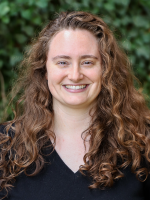
In November, Michigan voters will choose two justices to serve on the state Supreme Court. Michigan Public's Morning Edition is featuring interviews with the six candidates.
Judge Michael Warren has served on Michigan’s Sixth Judicial Circuit Court in Oakland County since 2002. He also teaches constitutional law at Cooley Law School. Warren is also a past member of the state Board of Education, where he served from 1999 to 2002.
Warren spoke with Michigan Public's Morning Edition host Doug Tribou.
Doug Tribou: You've served on the Oakland County Circuit Court for nearly 24 years. Would you describe your legal philosophy and the approach you take to cases that come before the court?
Michael Warren: Absolutely. I've tried over 400 jury trials, rendered thousands of sentences, and issued thousands of orders. And through all of that, my intention is to ensure that I apply the law fairly and impartially. And I understand and respect that the role of a court and a judge is not to legislate from the bench, but to simply apply the law, the fair, common understanding of the law at the time that it was enacted or ratified by the people or the Legislature.
DT: Is there a case or two from some recent years that has stuck with you as an example of how you put your philosophy into practice in the courtroom?
MW: So, I'll give you an example. The Legislature passed an expungement law, which allows criminal defendants to expunge their records, and it used to be extraordinarily difficult to do that. Personally, I don't think I would have voted for the law as it was enacted. I would have had stricter limits to what could be expunged. But that's not my job. The Legislature has moved forward with that revision. You know, I will say on the record sometimes that I would not have allowed if I was in the Legislature, I probably wouldn't have allowed you to have this opportunity. But you meet the criteria. You've changed your life around, you've moved forward in a very constructive and positive way. And therefore, I'm granting the expungement.
That happens basically every day I'm on the bench where there's a policy, a rule of evidence that I personally might not have agreed with. And I don't run around and say, I'm going to try to subvert the binding law. I'm going to apply the law as I find it to be applicable at the time. So I can't give you one or two cases, but I can give you thousands. So there you go.
DT: Supreme Court candidates appear on the ballot without any party affiliation listed. However, the candidates for the court are nominated by political parties. Democratic nominees and appointees currently hold a six-to-one majority on the Supreme Court.
You have been nominated by two parties, the Michigan Republican Party and the Libertarian Party of Michigan. If that's not a first in Michigan politics, it's certainly very, very rare. Could you share how that came together?
MW: So first off, I do want to emphasize that we do have a very unbalanced Supreme Court. It is six-to-one, Democrat-nominated majority. I've been nominated by the Republican Party. I have not actually been nominated by the Libertarian Party because the law does not allow — it's called fusion voting. They do not allow a candidate to be nominated by more than one political party.
But the Libertarians did not nominate anyone and instead endorsed me only. You're right, that it is historical. That's never happened before. I don't like to say I'm proud because pride is the first sin. But I'm very, very excited to be able to make that accomplishment.
DT: Libertarians and Republicans are more in alignment than, say, Republicans and Democrats often, but they are not always in alignment. Did you have any concerns about having the support of both?
MW: You're right. They're kind of like cousins. And there are many things that the Libertarians support that the Republicans support. And then there's other places where they diverge. And the great thing about being a jurist is the policy differences that the Republican Party and the Libertarian Party may have is not a realm that I need to get into because my job is, again, fidelity to the Constitution and to the law and to ensure that the law is enforced as is passed by the Legislature.
DT: You attended the University of Michigan Law School and were a clerk for former Supreme Court Justice Dorothy Comstock Riley in the 1990s. And you later worked for a major private firm, and now you're a circuit court judge. So you've seen the state judicial system as a whole from a number of vantage points.
The state Supreme Court plays a major role in how the entire court system functions and provides guidance on practical changes and reforms in the court system. If you're elected, what functional issues in the courts would you hope to address?
MW: Five of the seven justices on the Supreme Court were not judges until they got on the Supreme Court. So they're not there because they have presided over thousands of cases; they've proved their acumen and their judicial philosophy. They're there for other reasons. And so it's really important that that experience gap is showing in the Supreme Court.
So I understand how, practically, the rules of evidence are applied, how civil procedure is implemented, criminal procedure. The Supreme Court also maintains attorney-grievance disciplinary proceedings. The ethical considerations. Judicial tenure commission. Admission to the bar. So there's a whole slew of administrative processes and procedures that the Supreme Court's in charge of. And it's difficult to do those things if you've never tried a case as a judge.
DT: I would like to follow up on something you mentioned there. You said that the inexperience of the current justices on the Supreme Court in terms of not having been judges prior to their tenure on the Supreme Court, that their inexperience is showing. How so?
MW: Well, I'll give you one kind of mundane example, but it is extraordinarily important to how we function as a court. After COVID, there was a push by the Supreme Court to have as many remote proceedings as possible. They also passed a 12-factor test about whether or not a case or a particular part of a case should be conducted in person or remotely.
They're demanding 500 judges across the state, on every single case, go through 12 factors and then decide whether or not it should be in person or remote. And I just think that if you were a judge that had tried hundreds of cases and have issued thousands of orders and listened to motions and rendered sentences, you'd understand that you don't need a 12-factor test to know what can be done in person and what can be done remotely.
DT: Well, Judge Warren, thank you very much for your time this morning.
MW: You're very welcome. Thank you. God bless you. And God bless America.
Editor's note: Quotes in this article have been edited for length and clarity. You can play the full video of this interview near the top of this page.
Judge Casandra Morse-Bills is currently the presiding judge in Michigan's 23rd Judicial Court, which covers Alcona, Arenac, Iosco and Oscoda counties. She's been elected twice and has served on the court since 2018.
Morse-Bills spoke with Michigan Public's Morning Edition host Doug Tribou.
Doug Tribou: Judicial candidates in Michigan are listed without any party affiliation on the ballot. However, parties do nominate candidates for the court, and the Michigan Republican Party selected you as one of its nominees. The Democratic nominees currently hold a 6-to-1 majority on the court. You are a judge for the 23rd Judicial Court in Northern Michigan. Could you describe the role that court plays in our state court system and the most common types of cases that you hear there?
Morse-Bills: Well, I'm part of the largest geographical circuit in the state of Michigan. And you're correct, it's four different counties. However, I'm very uniquely situated even within my circuit. We have a small population, like many counties in Michigan, but we're very rural. And so I'm the only judge in my county, which means that I am elected as the probate judge, but I preside over probate, district, and circuit court.
I'm also the circuit court judge for criminal and civil matters in Arenac County as well. And I do all of the appeals for circuit court for our four-county circuit. So I do literally everything that you could possibly see in the courtroom, from arraignments and criminal court to civil litigation all the way to malpractice and, you know, homicide trials. I do everything in between.
DT: Could I ask you to describe your legal philosophy and the approach you take to cases that come before the court?
CMB: So my judicial philosophy is very simple. It is that I am a rule-of-law judge and that I follow the law and the Constitution. And for some reason, some individuals who hold judicial positions have lost sight of that and are not practicing our oath of office. Oftentimes in my courtroom, I'm bound by the law and required to make decisions that I don't necessarily personally agree with. However, I'm following the law. There's no room for politics in a courtroom. That belongs with our legislative branch. It does not belong on our Supreme Court.
DT: Could you tell us about a case or two that you've heard — and I know you've heard many, and many different kinds — that stand out in your memory as an example of the kind of work or mindset that you would bring to the Supreme Court?
CMB: Before I was a judge, I was the elected prosecuting attorney, and I was a defense attorney at one time as well. But I have been involved in many cases that impact victims. And I feel like that is something that really needs to be highlighted in this year's election. When you are starting to actually deal with humans and deal with people and what's happening to them, it's very different than somebody making a decision — an administrative decision or a technical decision — regarding the law from the Supreme Court.
The cases that stick out to me the most are the ones where I've been able to help people, and I've been able to help victims of crimes. And I could go on and I could talk about specific cases. However, I'm going to choose not to, I think, for this interview because some are very horrendous, some are very sad, but understand that these are the things that judges and attorneys deal with on a daily basis.
DT: Earlier this year, a former Oscoda County clerk filed a federal whistleblower lawsuit that claims she was fired for revealing that you exchanged text messages with a juror in a case last year. This was during a sexual assault case that you presided over. What is your reaction to that lawsuit and where does it stand today?
CMB: Well, that lawsuit is actually pending, and it has come up because I'm running for Supreme Court. So it was a district court clerk who filed this lawsuit because she was discharged. And she did make the allegation that I had been communicating with a juror in a trial. It's 100% incorrect and false. Frankly, what happened is I live, as I said, in a very small community. So you can imagine, I literally leave work and I'm at the grocery store and I see people that I sentenced that day or that I decided their custody case that day or what have you.
And that was what was reported is that I had talked to an individual who was an alternate juror on that trial, in fact, after trial. So there was never anything done during trial. And I can say with 100% confidence that it will be dismissed. It's very convenient that this case came about after the information came out that I was running for Supreme Court. So, you know, I hope that that fully explains the situation to the extent that I can discuss it at this point. Again, because that case is pending.
DT: The state Supreme Court justices work on a lot of rules and guidelines for lower courts in Michigan. And you've been a judge in the Michigan court system for several years now. Is there an issue or problem within the system that you've seen, in your view, from one of the lower courts that you would like to try to change if you're elected to the Supreme Court?
CMB: Five out of our seven Supreme Court justices that we currently have never served as a judge before they were elected to the Supreme Court. You know, as I said in the beginning of this interview, and I 100% hold true to this, that there is no place for politics in the court. However, this Supreme Court is so unbalanced. They have a supermajority, and it has been showing through their opinions that have been issued repeatedly over the years.
There are many, many changes that I would make. However, one that we are working on currently on the Michigan Judicial Council that I think is very important... with advancing technology, and that's providing equal access to our courts. So I know it's very difficult for people who represent themselves to navigate the court system, and I see that firsthand every day, because I have many individuals in my county that are impoverished and they can't afford an attorney, but yet they still have to navigate the court system. So I would like to see huge improvements in accessibility for everybody who needs to come into the court, but also consistency.
So I'm a big believer in that our court system should not differ so drastically from one county to the next. So, I mean, I have adjacent counties to my own where they handle different procedures very differently and filing requirements. We're a statewide court system, and so we should have some more uniform procedures that are put into place. So those are just two of the changes that I would try to initiate immediately if I was elected to the Supreme Court. But there are many more.
DT: Just to follow up on the makeup of the court, with the exception of Justice Noah Hood, who was appointed to his seat on the court but has been a judge at two other levels beforehand, all of the judges — or the justices, I should say — on the court, are currently elected officials. Would you change the requirements then for electing the Supreme Court? Because the voters of Michigan chose to put in people who did — or did not — have justice experience prior to being in their role now.
CMB: So would I try to change the requirements to be elected? No, I wouldn't do that. But what I would want to do is try to better inform the general public of the importance of the Supreme Court, the current makeup of the Supreme Court, and the issues that it is causing, not only in our court system but also in our communities.
DT: Judge Morse-Bills, thank you very much for your time this morning.
CMB: I thank you very, very much for having me and for allowing me this opportunity.
Editor's note: Quotes in this article have been edited for length and clarity. You can play the full video of this interview near the top of this page.
In May 2025, Justice Noah Hood was appointed to fill a vacancy on the Michigan Supreme Court. That partial term will end at the end of this year and he’s now running for a full eight-year term on the court.
Hood spoke with Michigan Public's Morning Edition host Doug Tribou.
Doug Tribou: I want to note here that Supreme Court candidates appear on the ballot without any party affiliation listed. However, the candidates for the court are nominated by political parties. Justices who have Democratic Party support currently hold a 6-to-1 majority on the court. And you have been nominated in this election by the Democratic Party.
You came to the Supreme Court after serving on the Michigan Court of Appeals. Before that you were a judge on the Third Judicial Circuit Court of Michigan in the Criminal Division in Wayne County. Would you explain your judicial philosophy and your approach to the cases that come before you?
Noah Hood: Absolutely. And it's a question that I've gotten now in this capacity that I wasn't used to getting before. And it's taken me a while to come up with a good answer because I'm not super-ideological. I wouldn't call myself a textualist, though most of my work sticks to the text pretty evenly. I wouldn't call myself an originalist, though I do look to discern the intent of the Legislature when passing bills or enacting a constitutional change. What I would say is, if pressed on my ideology, I would say I'm fact-based, a strict adherence to the facts.
DT: Is there a case or two from some of your years on the bench that has stuck with you as an example of something that you feel reflects the kind of approach you want to bring to the Supreme Court?
NH: Yeah. There's a case that I had a few years ago when I was on the Court of Appeals. C.B. vs. Livingston County Community Mental Health. And that case involved a kid who was a quadriplegic, couldn't speak, couldn't feed himself, couldn't walk. And he was entitled to a certain number of nursing care hours under Medicaid, a certain number of respite care hours under Medicaid. And he wasn't getting them. So his mom sued on his behalf.
And we decided that case based on the facts, based on the law, based on principles of fairness, but having no clue at that point in time how it would ultimately impact my own life, having no clue that at some point in the future, I would have my own kid on a trach and a vent, having my own challenges with at-home nursing. I shared that to say you need people doing this work that can make the right call when nobody is watching them, and the right call when everybody is watching them.
DT: Before becoming a judge, you served as an assistant United States attorney in the Eastern District of Michigan and in the Northern District of Ohio. You did a lot of work on fraud and white-collar crime cases. How did that work shape your view of our legal system? I realize that's federal and you're now serving in our state court system. But more broadly...
NH: My work as a federal prosecutor is where I got my trial experience. That work made me a better trial judge. You know, I'll share some of the best advice I've gotten in my professional career was as a new AUSA. Deputy Attorney General James Cole said, when you deal with people, it will be on the worst day of their lives. So you need to do the work right. You need to treat everyone with dignity and respect.
DT: As I mentioned, the justices who have support from the Democratic Party, either as appointees or nominees over the years, have a 6-to-1 majority on the court. What would you say to someone who says, I'm just concerned about imbalance... in whatever direction it is?
NH: I would encourage them to read the opinions. That 6-to-1 ostensible majority is a lot more nuanced than that. By way of example, the Eli Lilly case — that you all have covered, that was a 4-to-3 opinion. It's a split opinion and doesn't break evenly down partisan lines. And a lot of our opinions have been unanimous this past term, where you have that single Republican-nominated justice joining.
Because of that, you'll find that many of our opinions are more measured because we're trying to maintain the public's confidence that we're actually doing legal work. We're not partisan shills. We are looking at the facts first and applying the law.
DT: And I'll note here that the case you're referring to is known as Attorney General vs. Eli Lilly and Company. It involved investigations into insulin pricing practices.
I've asked a few justices this over the past ten years — when there is a high number of unanimous decisions, is there any concern of a perception that the court is taking cases that are less controversial, that they are looking for cases that are easier to decide because it's a clearer line to that kind of ruling?
NH: The short answer is no, because we don't have that time. We don't have the luxury of that capacity to do work on a pitty-pat case. We review between 1700 and 2000 applications for leave to appeal every year, but we only hear about 100 cases, and we only write on about 50 of them. The cases that we're taking are those that are jurisprudentially significant.
Now, the longer answer is: are we selective about which is the case that's the right vehicle for an issue that has been bubbling up? And I would say, yeah, we are. And that's not strictly to get to a specific result, but to make sure that the case has the best vehicle to get our questions answered. You might have someone who has a really good case and they're pro se, they're representing themselves. And then there's a question of, well, will this issue get fairly sorted out with a layperson unrepresented, or do we need a case that's similar that has lawyers on both sides? That's one of the considerations that will go into what is the best way to get to the core issue at the heart of the case?
DT: So you're talking about like, for example, you might have 10 cases related to data centers and local-versus-state control or whatever — we're not talking about actual cases here — but then finding the one that might be have the broadest implications if the court is to weigh in?
NH: That's right. And in some cases, we're obviously going to take the case. We're obviously going to have an argument because it is a matter of public concern and jurisprudential significance.
DT: The state Supreme Court exerts a lot of administrative control over how the court system works as a whole: how lower courts function, rulemaking, that sort of thing. And I wonder, with your experience as a judge in lower courts in the system and now as a justice on the Supreme Court, what areas you're interested in working on, on the administrative side? Do you have particular areas of interest that you'd like to see the court work on and improve?
NH: Yeah, we have to continue our commitment to our specialty courts. These are non-adversarial courts that are focused on treating underlying causes for criminal conduct, whether that's addiction, substance use, PTSD. The most obvious example is the veterans' treatment court. You know, I presided over the Veterans Treatment Court in Wayne County along with Justice [Richard] Bernstein. I'm one of the two justice liaisons to our treatment courts.
Now, these programs are working. They're quite literally saving people's lives. And if that's not a good enough reason, they're also saving money in our system because they are lean-run programs. People get to keep their job. They're not resulting in new arrests. They are — across the board — working. And if they continue to work at some point in the future, we're going to have to have a conversation about expanding them.
DT: Well, Justice Hood, thank you very much for your time.
NH: Thank you.
Editor's note: Quotes in this article have been edited for length and clarity. You can play the full video of this interview near the top of this page.
Megan Cavanagh is the chief justice of the Michigan Supreme Court. She was selected by her fellow justices to be chief justice in 2025 after Chief Justice Elizabeth Clement stepped down from the court. Cavanagh was first elected to the court in 2018 and is running for a new eight-year term.
Cavanagh spoke with Michigan Public's Morning Edition host Doug Tribou.
Doug Tribou: Would you start by describing your legal philosophy — for people who may not have followed your work — and the approach that you take to cases that come before the court?
Megan Cavanagh: I'm not one particularly that finds labels all that helpful. I think what we are all trying to do as judges, and what I try and do, is determine the intent of whatever that is — whether it's the citizens, the Legislature, voters who enacted the law — and try and understand what that intent is by looking at the words that are used, the context in which those words are placed, the overall statute or constitutional provision.
It's not a word or a label ... the intentionalist, I guess? You know, we're all trying to figure out what it is that is the law, because we are not the ones who enact the law, right? We are interpreting it and then trying to fairly apply that to the factual situation in front of us.
DT: You came to the court after a career in private practice with a prominent Detroit law firm. You had appeared before the Supreme Court as an attorney, but it was your first time as a judge or justice. Has your approach to the work changed over the eight years that you've been on the court?
MC: I tell you, one of the biggest surprises or learning moments for me was just the different role in the process, right? So as an attorney, when I was arguing a case in front of the Supreme Court, by the time that I got to oral argument, that was really the sort of end of the process. And so when I first got on the bench and started approaching oral argument and cases as a justice, I had to readjust.
Because, you know, following my first oral argument, I went in there thinking I knew what the answer was or what I thought the the result should be or my vote should be. I had to reevaluate that because of arguments that were raised and questions asked and answered.
DT: You've been a part of a lot of rulings over the past eight years on the Supreme Court, but I would like to ask if there's a case or two that have stuck with you, either because they seemed especially important or because they were unusual compared to other rulings?
MC: Sure. Probably foremost in my mind, because it was just an opinion that we released this last term, is People v. Jennings. And that is a a criminal case regarding the double jeopardy provision of the Michigan Constitution. And the significance, I think, of that case is it really lays out the analysis of how to look at Michigan's constitution independent of the U.S. Constitution. And so it's a really important opinion, I think, on the primacy of Michigan's constitution.
The other one is a case from earlier in my tenure, but again, with the Michigan Constitution. And that was Bauserman v. The Unemployment Insurance Agency. And that had to do with plaintiffs seeking a right to a remedy under Michigan's constitution when the state has violated Michigan constitutional rights recognized by our Michigan Constitution. And prior to that case, our court had held that there really was no remedy if the state violates the Constitution. And so I think Bauserman was significant in that regard.
DT: That was part of the fallout from when the state falsely accused thousands of people of unemployment fraud?
MC: Correct.
DT: In interviewing Supreme Court candidates and justices over the years, the issue of technology has come up a lot, especially the use of virtual hearings since the start of the COVID-19 pandemic. Your colleague, Justice Richard Bernstein, has strong opinions about courts operating in-person. And former Justice David Viviano told me that the courts were relying on Zoom too much, in his opinion, and that he felt that courts and litigants with different resources could end up on unequal footing.
What's your view of technology in the courtroom and what changes, if any, would you like to see if you're reelected?
MC: You know, a lot of what we studied during the pandemic and after was that there were certain improvements to the justice system in certain types of cases, right? Particularly in the area of child protective proceedings or in family-law cases where parents didn't have to take off work or kids didn't have to be pulled out of school. I think there was also some benefit to kids feeling more engaged and secure in the court process, right? Everybody's sort of the same size in a box, as opposed to going into an environment that can be intimidating.
But certainly there are downsides to it. In our Zoom world, it's different interacting, understanding mannerisms and body language and things online. And so what we have spent a lot of time — with a lot of input from the public, from attorneys, from our trial judges — is enacting rules, court rules that hopefully provide for that discretion to be exercised.
DT: Supreme Court candidates appear on the ballot without any party affiliation listed. However, the candidates for the court are nominated by political parties. You are a nominee of the Democratic Party, and justices who have Democratic Party support currently hold a 6-to-1 majority on the Michigan Supreme Court.
During your first campaign for the court in 2018, the split was 5 to 2 in favor of justices with Republican support. So there's been quite a swing over the past eight years or so. What would you say to voters who are concerned about imbalance in any direction, regardless of political affiliation?
MC: I think it's a legitimate concern. I think that, you know, different states do it differently. I am a fan of the elected system because I think it's important for people who serve the public in the role of justice, that they hear from voters, that they talk about the importance of our state courts and the job that we're doing and hear from people about what's working and what's not working. And I think the elective process in that regard is a very effective system for that.
I would prefer that the political nomination part were not part of our system, but it is. I will tell you that when we sit around a conference table, we are not saying, "Well, you're the Republican and you're the Democrat." Very few issues that come before us really fall along what I would call partisan lines. We may have differing opinions, but I think what we're trying to do as justices is decide the law fairly, like I said at the beginning. Decide the law fairly and to give effect to the what the public understands the law is, and explain that clearly so that the public can understand what their rights and responsibilities are.
DT: Well, chief justice, thank you very much for your time.
MC: Absolutely. Thank you. It's always a pleasure to talk about the great work that our state courts are doing.
Editor's note: Quotes in this article have been edited for length and clarity. You can play the full video of this interview near the top of this page.
Thomas W. Howe is a resident of Fenton and he’s a candidate for the court. He spoke with Michigan Public's Morning Edition host Doug Tribou.
Doug Tribou: Judicial candidates in Michigan are listed without any party affiliation on the ballot. However, parties do nominate candidates for the court, and the U.S. Taxpayers Party of Michigan selected you as one of its two nominees. There are two seats up for election, and there are currently six Democratic nominees and one Republican nominee currently on the court.
To start, tell us a bit about your professional background and why you have decided to run for the court.
Thomas Howe: Well, I'm a 35, or more, I don't know, 36-year engineer for the automotive industry. I accidentally got involved in this probate disaster here in Michigan with my mom and in Genesee County here. And currently right now, I'm trying to unravel it in federal court.
So there's no justice here in Michigan at this point. And the Supreme Court is responsible for all the lower courts and making sure that they operate correctly and constitutionally. And our Supreme Court justice here, Megan Cavanagh, is not doing her job.
DT: The current chief justice of the court.
TH: Yeah. She's been there for eight years. These bar judges, just like Megan Cavanagh, who's a Michigan bar member, an unlicensed bar member, they're ignoring all the probate cases. They never get heard in the Michigan Supreme Court. And so your chances of justice are zero here in the state.
DT: Well, just to pick up on a couple of points there... most cases, of course, don't end up at the state Supreme Court. Most probate cases, even if they're appealed, might be resolved, say, at the Court of Appeals, if they went above the lower court level.
And you say she's an unlicensed member of the bar. She's a practicing attorney who is licensed to the bar. And I will say she's a Democratic nominee in this election and also running. So I think you're trying to make a distinction that the bar is not a license, but I believe it would be viewed that way as a license to practice law in the state of Michigan.
TH: Viewed is one thing. The facts are different, okay? If you look at any bar member's P-number card, it says membership on it. It does not say license at all. And there's no law in the state of Michigan that allows a private membership association like the Michigan Bar Association to be the official licensor in the state of Michigan.
DT: Just one additional point here: the state Supreme Court sets the rules for bar admission for members of the bar in the state of Michigan.
As I mentioned in the introduction, you are a resident of Fenton. You mentioned that you have worked professionally as an engineer over the last three and a half decades or so, but you're not an attorney. Michigan law requires Supreme Court justices to be licensed to practice law in Michigan, and to have been admitted to the practice of law for at least five years. You don't meet either of those requirements. So if you were to win the election, you would not be able to serve on the court. Why are you running then?
TH: Because the state needs a different choice. The issue is that the bar members that are currently on the Michigan Supreme Court are not doing their job. They'll never do their job, and the public needs to take this court back. The system is broke. Since Megan Cavanagh has been on the bench, the probate court has accelerated the damage that they do to the citizens. Now you have to remember, these are public functionaries. They work for me. They work for the citizens of their county.
DT: Right. And you can elect them or not elect them as you see fit. And if the terms are held in full, two seats come up every election cycle, so that people are coming and going on and off the bench often, if they're not re-elected. And then there are frequently cases where someone retires or resigns, and then there's an appointment. So the court is not a stable organization with eight people constantly in for eight years at a time. There's a rotation and the people have the chance to vote those people out.
TH: Well, that's true. So here's your chance, right now, for the state of Michigan to finally make a good decision and vote these two members out who have done nothing to help the people in the state of Michigan here in these particular courts.
DT: So for our listeners' clarification, I want to just make another note here. Under Michigan law and a 1997 opinion from the attorney general, it is legal for people to run for the Michigan Supreme Court, and they can qualify for the statewide ballot, as you've done, even if they don't meet the requirement of five years of legal practice.
But they must meet that requirement by the time they're sworn in. And again, since you are not practicing law under the bar as a member of the bar, it's impossible for you to have five years of experience by the start of next year. Was that the intention of the U.S. Taxpayers Party? Was the intention to purposefully run non-attorneys to make that case?
TH: It's possible.
DT: I might ask, why not try to run a constitutional amendment to change that? If you're unhappy with attorneys being the only ones eligible for the court, an amendment to the Constitution might be able to resolve the issue that it seems that you're trying to get to.
TH: And that's a great question. And that comes up for everybody to vote yes on the Constitutional Convention. And then over the next two years, there'll be a group of people, and I'm not sure who — they will be appointed, hopefully by our new governor, Donna Brandenburg, and Lieutenant Governor Robert Cowper, who [are running] for the U.S. Taxpayers Party, who are probably two of the smartest people I've met.
And people are really unhappy with basically the Uniparty. Both [major-party] candidates are both bad. And so you have a really good candidate. And you should look at Donna Brandenburg and Robert Cowper II for your governor.
DT: It's not hard to imagine someone getting into the voting booth who's interested in third-party candidates and has read or heard your name or the name of Jody White — who's also a nominee of the U.S. Taxpayers Party — and chooses you on their ballot, assuming that you might actually take office, which it certainly appears that you cannot.
Do you have any concern about confusing voters if it turns out that you're not going to be able to actually sit on the court when they've cast their ballot thinking that is the case?
TH: No, because we want this. This needs to be challenged because it's not legal to have an outside corporation, the Michigan Bar Association, to basically... they've shanghaied the state of Michigan and and they don't have authority to do this. The laws that have been passed are usurpation by both the Legislature and the Michigan Supreme Court.
DT: Thank you for your time this morning.
TH: All right. Thank you.
Editor's note: Quotes in this article have been edited for length and clarity. You can play the full video of this interview near the top of this page.
Jody White is a long-time real estate broker in Southeast Michigan. She also ran as a candidate for the state Senate in 2022 and the state House of Representatives in 2018.
White spoke with Michigan Public's Morning Edition host Doug Tribou.
Doug Tribou: As we get started here, I want to note for our listeners that judicial candidates in Michigan are listed without any party affiliation on the ballot. However, parties do nominate candidates for the court, and the U.S. Taxpayers Party of Michigan selected you as one of its nominees. There are currently six Democratic nominees and one Republican nominee on the court.
You're a real estate broker. You used to own your own firm. You've run for other offices, weren't elected, but ran for a couple of offices. So you've been a candidate before, but you are not an attorney. And Michigan law requires Supreme Court justices to be licensed to practice law in Michigan, and to have been admitted to the practice of law for at least five years. You don't meet either of those requirements. So if you won the election, you wouldn't be able to serve on the court. Why are you running?
Jody White: I am part of the National Association of Realtors and the Michigan Association of Realtors. Those are memberships. I get a membership card. And I actually have a state license to practice the field of real estate, which is ownership, title work, lending. If you can show me a bar license, that'd be great. If you look at their P-number on their little card, it's called membership.
Why I'm running is because of the close network of bar members that have been running the judiciary for many decades. I've been very much an advocate in the civil end of it, which is what really real estate is about, making sure that we're protecting your ownership or protecting your liberty and the rights to have property. And then we end up in probate court where these attorneys are working in probate court and are able to take what is your inheritance or your generational wealth.
A note from Michigan Public:
During our interview, Jody White told us about a complex probate case in her own family. We did not have time to go into detail about that case for this interview, but it included charges of embezzlement against a relative. As the conversation continued, Doug Tribou read her the requirements to take office as a Supreme Court justice.
DT: A person must be a registered and qualified elector of the state of Michigan by the filing deadline — that means an eligible voter — licensed to practice law in Michigan, and at the time of the election or appointment, be less than 70 years of age. In addition, the individual must have been admitted to the practice of law for at least five years.
We checked with the Secretary of State, and it's perfectly valid for you to be on the ballot. Those things only have to happen by the time you're in office, but you can't practice law for five years between now and January...
JW: I've never stopped practicing law. You know, we are all supposed to be lawful, legal, and compliant people. We're supposed to follow traffic signals and 55 miles per hour. But there's been a membership of people, this closed cultural profession, that are able to basically rule our judiciary.
And if you look at my background and when I ran for state representative and state Senate, it was about the credibility of the courts. And our goal is to make sure that maybe laypeople who are not part of this membership get a fair chance. Nobody is of nobility. There's no king in America. We are all created equal. And I do love Judge [Michael] Warren because he's very good at quoting things verbatim.
DT: He's one of the Republican nominees in this cycle.
JW: Right. And he was talking about our inalienable rights. And one of them is we are all created equal. And by being created equal doesn't mean just because you're an esquire, that you get more privilege or more power over the rest of us.
DT: But Judge Warren is an attorney. I'm sorry to cut you off.
JW: He's a bar member. He's a member of the bar.
DT: He's a member of the bar, which makes him an attorney who has practiced law and then become a judge. And he is one of the candidates running. He's currently a judge in Oakland County and running [for the Supreme Court].
But to go back to one of your points there, you referenced the people being in charge of the courts, but we elect the members of the court. So the election is the voice of the people. A constitutional change would be another matter. But it's clearly stated "the practice of law." And I think it's fair to say that that means actually being an attorney who is doing the work of assisting clients with the law, not just being a good standing citizen who follows the law as hopefully we all try to do.
JW: See, that's the thing. A lawyer does not have different standards. There is a systemic issue going on in the courts. We have wrongful convictions. We have plea bargains that are being coerced by this profession of cultural professionals who have put themselves above the people. So I just want to be one of those justices that continue to be that public functionary to work for the people.
DT: Under Michigan law and in the state Constitution, followed by a 1997 opinion from the state attorney general, it is legal for you to run for the Michigan Supreme Court, and you can qualify for the statewide ballot, which you've done, even if you don't meet the requirement of five years of legal practice. But you have to meet that requirement by the time you're sworn in. And again, since you don't practice law, it would appear that you are not able to be sworn in if you're elected. But I want to ask...
JW: And again, I'm going to argue that because I do practice the law and I'm telling you...
DT: But not as an attorney, you don't.
JW: We are a law-abiding group of people. I want everybody to go back and look at the Republican organization, the Democrat organization, and the lawyers' organization. They are all trade organizations, no different than the real estate organization.
DT: It's not hard to imagine someone getting into the voting booth who's interested in third-party candidates and either read or heard about your name or your fellow party nominee, Tom Howe, and chooses you on their ballot assuming that you might actually take office, which again, it appears you cannot. Do you have any concerns about confusing voters? At the very least, you're acknowledging that it will be a contentious point if you were to be elected.
JW: Well, and again, I'm going to go back to the Michigan Code of Judicial Conduct that says that the court is...
DT: Do you have any worry about confusing voters? You've made...
JW: No, we're going to go back to the rules of what the judiciary is supposed to be for: for the people and the litigants, and not these club members that are really overtaking our state of Michigan. And I think Michigan deserves better. I think the people deserve better. And I do believe that the people want better. I hope if anybody is confused that they do their own research about what I said about the different trade organizations; we're just not going to follow the status quo.
DT: Thank you very much for your time.
JW: Thank you, Doug.
Jody White emailed us shortly after our interview. In that email, she acknowledged the state's constitutional requirements to become a Supreme Court justice.
She added, "My candidacy asks voters to examine whether exclusive professional control over eligibility and judicial administration continues to serve the public interest."
____________
Editor's note: Quotes in this article have been lightly edited for length and clarity. You can play the full video of this interview near the top of this page.