In November, Michigan voters will choose two justices to serve on the state Supreme Court. Michigan Public's Morning Edition is featuring interviews with the six candidates.
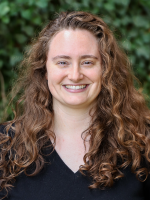
Megan Cavanagh is the chief justice of the Michigan Supreme Court. She was selected by her fellow justices to be chief justice in 2025 after Chief Justice Elizabeth Clement stepped down from the court. Cavanagh was first elected to the court in 2018 and is running for a new eight-year term.
Cavanagh spoke with Michigan Public's Morning Edition host Doug Tribou.
Doug Tribou: Would you start by describing your legal philosophy — for people who may not have followed your work — and the approach that you take to cases that come before the court?
Megan Cavanagh: I'm not one particularly that finds labels all that helpful. I think what we are all trying to do as judges, and what I try and do, is determine the intent of whatever that is — whether it's the citizens, the Legislature, voters who enacted the law — and try and understand what that intent is by looking at the words that are used, the context in which those words are placed, the overall statute or constitutional provision.
It's not a word or a label ... the intentionalist, I guess? You know, we're all trying to figure out what it is that is the law, because we are not the ones who enact the law, right? We are interpreting it and then trying to fairly apply that to the factual situation in front of us.
DT: You came to the court after a career in private practice with a prominent Detroit law firm. You had appeared before the Supreme Court as an attorney, but it was your first time as a judge or justice. Has your approach to the work changed over the eight years that you've been on the court?
MC: I tell you, one of the biggest surprises or learning moments for me was just the different role in the process, right? So as an attorney, when I was arguing a case in front of the Supreme Court, by the time that I got to oral argument, that was really the sort of end of the process. And so when I first got on the bench and started approaching oral argument and cases as a justice, I had to readjust.
Because, you know, following my first oral argument, I went in there thinking I knew what the answer was or what I thought the the result should be or my vote should be. I had to reevaluate that because of arguments that were raised and questions asked and answered.
DT: You've been a part of a lot of rulings over the past eight years on the Supreme Court, but I would like to ask if there's a case or two that have stuck with you, either because they seemed especially important or because they were unusual compared to other rulings?
MC: Sure. Probably foremost in my mind, because it was just an opinion that we released this last term, is People v. Jennings. And that is a a criminal case regarding the double jeopardy provision of the Michigan Constitution. And the significance, I think, of that case is it really lays out the analysis of how to look at Michigan's constitution independent of the U.S. Constitution. And so it's a really important opinion, I think, on the primacy of Michigan's constitution.
The other one is a case from earlier in my tenure, but again, with the Michigan Constitution. And that was Bauserman v. The Unemployment Insurance Agency. And that had to do with plaintiffs seeking a right to a remedy under Michigan's constitution when the state has violated Michigan constitutional rights recognized by our Michigan Constitution. And prior to that case, our court had held that there really was no remedy if the state violates the Constitution. And so I think Bauserman was significant in that regard.
DT: That was part of the fallout from when the state falsely accused thousands of people of unemployment fraud?
MC: Correct.
DT: In interviewing Supreme Court candidates and justices over the years, the issue of technology has come up a lot, especially the use of virtual hearings since the start of the COVID-19 pandemic. Your colleague, Justice Richard Bernstein, has strong opinions about courts operating in-person. And former Justice David Viviano told me that the courts were relying on Zoom too much, in his opinion, and that he felt that courts and litigants with different resources could end up on unequal footing.
What's your view of technology in the courtroom and what changes, if any, would you like to see if you're reelected?
MC: You know, a lot of what we studied during the pandemic and after was that there were certain improvements to the justice system in certain types of cases, right? Particularly in the area of child protective proceedings or in family-law cases where parents didn't have to take off work or kids didn't have to be pulled out of school. I think there was also some benefit to kids feeling more engaged and secure in the court process, right? Everybody's sort of the same size in a box, as opposed to going into an environment that can be intimidating.
But certainly there are downsides to it. In our Zoom world, it's different interacting, understanding mannerisms and body language and things online. And so what we have spent a lot of time — with a lot of input from the public, from attorneys, from our trial judges — is enacting rules, court rules that hopefully provide for that discretion to be exercised.
DT: Supreme Court candidates appear on the ballot without any party affiliation listed. However, the candidates for the court are nominated by political parties. You are a nominee of the Democratic Party, and justices who have Democratic Party support currently hold a 6-to-1 majority on the Michigan Supreme Court.
During your first campaign for the court in 2018, the split was 5 to 2 in favor of justices with Republican support. So there's been quite a swing over the past eight years or so. What would you say to voters who are concerned about imbalance in any direction, regardless of political affiliation?
MC: I think it's a legitimate concern. I think that, you know, different states do it differently. I am a fan of the elected system because I think it's important for people who serve the public in the role of justice, that they hear from voters, that they talk about the importance of our state courts and the job that we're doing and hear from people about what's working and what's not working. And I think the elective process in that regard is a very effective system for that.
I would prefer that the political nomination part were not part of our system, but it is. I will tell you that when we sit around a conference table, we are not saying, "Well, you're the Republican and you're the Democrat." Very few issues that come before us really fall along what I would call partisan lines. We may have differing opinions, but I think what we're trying to do as justices is decide the law fairly, like I said at the beginning. Decide the law fairly and to give effect to the what the public understands the law is, and explain that clearly so that the public can understand what their rights and responsibilities are.
DT: Well, chief justice, thank you very much for your time.
MC: Absolutely. Thank you. It's always a pleasure to talk about the great work that our state courts are doing.
Editor's note: Quotes in this article have been edited for length and clarity. You can play the full audio of this interview near the top of this page.