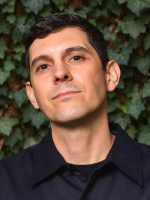
State Senator-elect Abbas Alawieh defeated Republican candidate Harry Sawicki in the race for Michigan's 2nd district, which includes Dearborn, Dearborn Heights, Allen Park, Melvindale, and Taylor. Alawieh made history as the state's first Muslim and Arab-American senator.
"...I'm not running to be an Arab and Muslim American leader," Alawieh said. "I'm running to be a leader of every single person in the 260,000-person district that I represent. And I just want this part of my identity to just be a part of my story. Not all of it."
Alawieh was a co-founder of the Uncommitted movement, and is an outspoken advocate against Israel's war on Gaza. He previously worked as congressional Chief of Staff to Rep. Cori Bush, and as a legislative staffer for Rep. Rashida Tlaib and Rep. Andy Levin.
Alawieh acknowledged his constituents' concerns about affordability, as well as general concerns about protecting democracy.
"When I would knock on people's doors... they're worried about a federal government that is slowly chipping away at the very foundations of our democracy," Alawieh said. "And so I've spoken with governor-elect Jocelyn Benson, about her desire to see a Michigan Voting Rights Act on her desk and signed within those first 100 days, and I intend to be one of the leaders who helps deliver that."
Alawieh spoke with April Baer about the responsibility he feels as an Muslim and Arab American in a position of political power, and the issues he'll be prioritizing as the legislative session begins.
Scroll up to listen to the full interview, or read the transcript below:
April Baer: This is an incredible year for a lot of Arab American and Muslim voters. Are you the first state senator who's Arab and Muslim?
Abbas Alawieh: Arab and Muslim American, I believe. So we've got, I think, at least several folks who have had Arab Ancestry in the state legislature. But as far as I'm aware, you know, that is one historic first.
AB: Congratulations.
AA: Thank you so much.
AB: Your district is a Democratic stronghold, so your real race was the primary. What went through your mind on primary election night when it became clear that you were going to win?
AA: Primary election night was very emotional for us, both because, I'm just someone who's going to do the work all the way through the finish line. And so even though we ended up winning by 18 points, if you would have asked me [during the] primary election, I said, "It's very close. It's very close." And before the general, you know, where Democrats have won up and down the ballot, if you would have asked me, [I would have said,] "It's very close. We've got to run through the finish line." And so at first, it was actually quite unbelievable.
But, I don't know if you know this, but it ended up being that right as we were getting the results, and I was excited to go out and announce that we had won and gave a victory speech, in that moment, we got notice that my grandfather, who lives in East Dearborn, had just passed unexpectedly.
And so I went from being at my election night watch party, where we were about to make history, to being in his living room with him having just passed. And with my close cousins doing the things that a family has to do when a loved one passes. And so, I had seen him earlier in that day, and he prayed for our success. And we had so many polling locations covered. And it was all his kids, you know, my aunts and uncles, my mom, his nieces and nephews, his grandkids. And so his own influence and thumbprints were all over our primary win.
And that's really special, because so much of the message of our campaign from the outset was, "We're running, and I'm running to take care of every single person in Senate District 2like I care for my own family." And so that family thread, I think was both important for me personally, certainly was important for me that night. But it's also important for a district that has undergone a lot of political turmoil, I would say, over the last few years especially.
AB: I'm really sorry for your family's loss.
AA: Thank you.
AB: Your grandfather didn't live to see you make that victory speech that night, but he certainly saw you deeply involved in all kinds of community, from your work as a congressional staffer, to your work in the 2024 presidential race, and everything that that came after that. And I just wonder what he or other folks in your family have said to you about your path in public service?
AA: Yeah, so much of my experience with my elders and my family, my cousins, folks in community who I might have gone to high school with — there's a real pride. But there's also, you know, especially in 2024 when I would be on national TV advocating for a ceasefire, advocating for a stop to the endless flow of weapons to fund endless war. And at the time, at the onset of the genocide in Gaza, a lot of my cousins, a lot of my elders, there's this sense of — I can see it in their eyes — "We can't believe that you're getting to speak with moral clarity and strategic clarity on an issue that has felt so familiar to us for so long, and so common sense to us for so long, but that hasn't been spoken out loud at the levels that you're speaking at."
And so with that comes, sure, that pride, but for me personally, just an enormous sense of responsibility to do right by the people who are counting on us, especially given my own ethnic and religious background as an American. I'm Senator-elect now. I'll be sworn in in January. And already the deluge — I mean, certainly I experienced it in the primary, and certainly since the general — but there's a certain level of hostility that you endure as a Muslim American in public life. We saw that with Senator elect Abdul El-Sayed's campaign and experience. And that's not easy. And so I think there's also just a deep concern that comes from my elders.
AB: Was there ever concern for your safety?
AA: Of course. I mean, you know, it's interesting because my own experience in public service was working in the United States Congress, for example, on January 6th of 2021, when the likes of Jake Lang and Jake Lang himself were outside attacking the Capitol, not because they were Islamophobic, but because they have a certain animus towards our very system of government, our democracy.
Here I am running for office two years later. Jack Lang, of course, has been pardoned by Donald Trump. And every time that he came to town during the primary election season, actually two different times, my office was attacked. My campaign office was attacked in acts of racial intimidation, or ethnic intimidation. At one point, at one time, there was a brick thrown at my name that was outside. And it was scary.
AB: Just to be clear, do you attribute that to him and his team? Or to the emotions of the time when people who follow him were encouraged?
AA: The latter. I don't think it was him and his team, but certainly the level of hate that he was inviting into our communities here. So I went from, you know, understanding what he and people like him were trying to do to our democracy in Washington, D.C. And now, here I am, back in my campaign office in Dearborn and Dearborn Heights, and people are inspired by his hateful rhetoric, by his Islamophobic rhetoric, to attack my office.
And for me, what it clarifies for me is that the likes of Jake Lang and other folks who are animated by the Islamophobic rhetoric that we're seeing from the president on down — they're not they're not attacking just Muslims, right? And I know, as evidenced by their involvement in January 6th, their contempt is for our democracy itself. It's for a democracy that can include everyone, including Muslim Americans. And that's why I think it's really important for us to fight as hard as we can for this, for democracy.
AB: Now that you're an elected official yourself at the state level, can you talk to us a little bit about how you intend to put the priorities you expressed on the campaign trail, including maybe some of those health issues, into practice? This is a time when a lot of self-employed Michiganders have seen their premiums go through the roof, and we're looking at some huge cuts to Medicaid, which, of course have been passed along from the federal government. What's your first hundred days looking like?
AA: Well, we've got to walk and chew gum at the same time on some of these issues. It's going to require us fighting for policy change while also doing that downstream work of "visiblizing" our constituent services operations to help as many people as possible hold on to the care that they need.
So many people now, as a result of the failed policies and the really cruel policies that we're seeing handed down from the federal government, are about to be kicked off of Medicaid, or subjected to work requirements and reporting requirements that are so cumbersome, so hard to keep track of, especially for working people who are just trying to make ends meet. I know that as a kid who relied on Medicaid and my mom would work three jobs at a given time, and still had a hard time making ends meet. And so I intend to set up a constituent services operation that is visible, that is accessible in as many languages as possible to folks in Senate District 2, which includes the Dearborn area, Detroit downriver communities, to as many people as possible. We've got to do the downstream work and visualize that constituent services work.
And then on the policy side, I mean, if you would have asked me right before, I think I was mentioning to you, I was pinching myself, I think right before the election, "I think we're about to win everywhere." And I couldn't believe it. But the fact that we have 63 members in the House, in the Michigan Legislature, and we've expanded our majority in the Senate -- we'll have 23 out of 38 seats. I think that is a very clear mandate for change, for bold action that the people of Michigan are telling us we need to deliver on.
And at the top of that list has to be delivering on affordability. Both on the health care front, both on water affordability, both on addressing our utility bills, and making sure we are being aggressive about how we are addressing people's pain, that that has to be top of mind.
In addition to that, I think there are some basic things that I certainly heard a lot about on the doors. When I would knock on people's doors, a lot of folks are, as much as they're worried about affordability, they're worried about a federal government that is slowly chipping away at the very foundations of our democracy. And so I've spoken with governor-elect Jocelyn Benson, about her desire to see a Michigan Voting Rights Act on her desk and signed within those first 100 days, and I intend to be one of the leaders who helps deliver that.
AB: What actions could the legislature take next year that governor-elect Benson would sign that might make an impact on, say, water affordability?
AA: Well, we've got an excellent package in the Senate that Senator Stephanie Chang has led on for a long time, that incoming leaders like Senator-elect Felicia Brabec and others, myself included, who understand. I mean, I got to work on water affordability during the pandemic when I was working on Congresswoman Rashida Tlaib's team and working closely with Congresswoman Debbie Dingell. There are some actions that were taken at the federal level that helped shift what's possible, shift the Overton window to allow for more programs that can help folks with their water bills that we can expand upon as a legislature. And so I intend to help lead the fight there.
There's also, I think, a good amount of feeling of possibility, especially around some of the issues that are giving folks in the community a lot of anxiety. I mean, data centers is one of them. And I think there are real things that we've got to do immediately to ensure that you know, at a very basic level. Some of these things around, you know, they're making some local officials sign non-disclosure agreements, so they can't even speak publicly about what kinds of deals they're cutting. We've got to ensure that community benefits agreements are at the forefront so that communities can be the ones empowered to decide if or how to proceed as it relates to data centers in their communities.
But I have seen that governor-elect Benson has also supported a moratorium. And I think that a moratorium while we figure out and put in place a framework that protects communities is a good idea.
AB: I agree that the majority that the Democrats will be walking into in January is pretty remarkable. There is this thing that happens where Democrats struggle to coalesce around priorities. You know, it may be a little bit different with a number like 63 in play, but how do you anticipate the party will deal with these sticky points for leadership? I mean, everyone agrees they'd like to see slowing in data centers. They may not agree on a moratorium. A lot of people agree that people need help with their water bills. But some people have different ideas about where that pinch point lies. Are the Democrats going to really speak in one voice this year?
AA: I think we are better positioned than ever, and I'm most encouraged by the fact that, you know, last week, it was my first day taking a caucus vote. So now as a Senator-elect, I can't vote on bills, but I can vote on how the Democratic caucus organizes itself.
AB: How the leadership structure is going to go.
AA: Exactly. And what we're hearing very clearly by our incoming Senate Majority Leader, Darrin Camilleri, and he said plainly, he intends to lead us into the most productive legislative session in the history of this state. Now I know Darrin. I trust Darrin, and I know that Senate Majority Leader-elect Camiller would not be putting that forward as a promise, were it not for his deep desire and commitment to delivering that. And on the other side, with Speaker-elect Ranjeev Puri, I think one of the things that we've seen maybe in this state, but certainly elsewhere, is it can be really difficult when a Senate majority leader and a speaker, even when they're from the same party, don't have that working relationship. And I think they do.
AB: So you're off to Lansing this week for legislative orientation. I know you know a lot about legislative process in Washington. For better and for worse, Lansing is not D.C. What are you looking forward to as you get the hang of things?
AA: I remember attending new member orientation in 2020 at the congressional level for my then-boss when I was a chief of staff. It ends up feeling like, you know, the first day of school. And I'm very much looking to that feeling of it. But one of my impressions of Lansing is that a lot of what's wrong with Lansing is how insular it can be. And I want us to have a Lansing - the state capital - I want us to have a state Senate that is the people's state Senate. That doesn't just rely on Lansing and the folks in Lansing bubble to finance our elections, to get the policy ideas that we're advancing. I want us to take this show on the road. I want us to go to the people, wherever they are, certainly including in Senate District 2, and be not just communicative, but intentional about partnering with communities about how we're setting that agenda and implement a level of transparency that clearly communicates - as many senators have have done for a good while, but it needs to be the standard across the board - what it is that we've done, what isn't, and why. You know, explain the politics around it.
I want to be a reliable messenger, a narrator, politically, of what's happening in our state capital, to the folks who traditionally are shut out of those decisions.
I want to share one thing. It's a really, it's a really interesting experience for me being now a, an Arab and Muslim American elected official on the receiving end of so much xenophobic and Islamophobic hate and vitriol online and right-wing press. And having that juxtaposed with a reality in the community that I grew up in.
If a kid grows up on Miller Road, where I grew up in Dearborn, their mayor happens to be Arab and Muslim American. Their congresswoman is Arab and Muslim American, their state senator, and their U.S. senator, and their other U.S. senator is a Jewish American person who has been adamant about partnering with her new colleague. And you know, their governor, secretary of state, attorney general, lieutenant governor, represent the diversity of this state. That feels like a world beyond anything I could have imagined as a kid.
Because even in my own leadership, I'm not running to be an Arab and Muslim American leader. I'm running to be a leader of every single person in the 260,000-person district that I represent. And I just want this part of my identity to just be a part of my story. Not all of it. And the fact that there are so many Arab and Muslim Americans in public life in Michigan now, in a state that prides itself on having Arab and Muslim Americans as part of its diverse tapestry, I think is a really positive thing. Because maybe now, finally, we can be, you know, taken seriously for our ideas and not what people might project onto, you know, any one individual or another because of their name or their faith.
____________
Editor's note: Quotes in this article have been lightly edited for length and clarity. You can play the full audio of this interview near the top of this page.