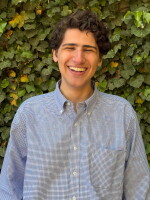
Shin, a flutist, was two years into a PhD in music at Michigan State University when he won an audition to join a nearby professional orchestra. Then, a few months later, he won another seat, this time in a major Michigan orchestra.
“It felt like, ‘Oh, it’s happening, finally,” Shin remembered. “I've been playing for so long and it's, I finally feel like I can actually make a living out of just playing.”
Shin is an international student from Brazil. (Michigan Public is not using his full name because he is concerned that an interview could jeopardize his visa.)
He was authorized to work in the U.S. through a program known as Curricular Practical Training (CPT), which lets international students participate in experiential learning opportunities that are directly related to the student’s area of study and “integral” to their degree.
For the last 35 years, the Department of Homeland Security has interpreted that to include opportunities—like Shin’s orchestra membership—that were voluntary but directly linked to a specific course on the student’s schedule.
But in August, just before the start of school, DHS issued new guidance: colleges and universities could only authorize CPT if “its absence would make the attainment of a degree an impossibility.”
Most degree programs don’t mandate that students get an outside job. In effect, the new policy shut down the main pathway for international students to work off campus.
Shin could find a new job on campus, but he couldn’t perform with the orchestras.
“The first two weeks after that email, I couldn't close my eyes for more than two hours at a time,” Shin said. “I kept waking up and thinking, what am I going to do with my life now?”
The Trump administration’s restrictions on CPT are only the latest in a flurry of changes to the regulations that govern international enrollment at U.S. universities — changes that advocates describe as an intentional attack.
“What we have seen is an escalating cascade of policy actions and proposals, with the goal to really disrupt and dismantle the international student pipeline into the U.S.,” said Miriam Feldblum, President and CEO of the Presidents’ Alliance on Higher Education and Immigration, an advocacy group composed of college and university leaders.
In the last two years, Feldblum said, the Trump administration has: implemented a travel ban to 40 countries; delayed the visa review process and increased scrutiny of applicants’ social media; revoked students’ legal status without explanation; attempted to cap visas at four years, requiring students pursuing longer degrees, like PhDs, to apply for an extension midway through their program with no guarantee of approval; and attempted to charge tens of thousands of dollars in application fees for post-graduate work visas.
Taken together, Feldblum said, these changes affect hundreds of thousands of international students in the U.S.
“This is not about thoughtful, deliberate evaluation of what is working and what is not,” Feldblum said. “This is about wholesale disruption and dismantling of what we know makes the U.S. so great: that we are able to recruit and retain talent from around the world.”
“And who's losing in this?” Feldblum added. “We're losing.”
The Presidents’ Alliance is suing over some of these new policies, including the alterations to CPT.
MSU filed a declaration supporting that lawsuit, which argues the Trump administration skipped due process when it bypassed the conventional rulemaking process to impose the new restrictions, essentially, overnight. (DHS framed the new CPT guidance as a “reminder” of existing obligations—despite evidence to the contrary—and threatened legal action for non-compliance.)
DHS and the White House both declined an interview request. In a statement, a spokesperson for DHS wrote: “The performative outrage is incredible. Where was the outrage when foreign nationals were abusing the system, violating the terms of their student visas, and making a mockery of our immigration laws? If the media really cared about legitimate international students, they would be thanking President Trump for cracking down on the rampant fraud to ensure only those truly intending to study in the United States are given the privilege.”
Administrators at a few Michigan universities told Michigan Public they’re doing their best to keep students up to date on all these changes: what’s proposed, in effect, or on hold in court. But they can only explain what the federal government tells them. In those conversations, administrators used one word again and again: “uncertainty.”
“Before” and “after” the second Trump administration
Pasha, a PhD student at the University of Michigan from Islamabad, Pakistan, carries her immigration documents with her at all times. She keeps them in the front pocket of her overstuffed blue backpack. (“Pasha” is a nickname.)
Non-citizens have long been required to carry proof of legal status, but the Trump administration has declared enforcement of that rule a priority.
Pasha, who first entered the U.S. during the Biden administration, said she sees the requirement in a new light now: the documents she keeps within arm’s reach are a constant reminder that at any moment, she could be stopped by an immigration agent.
“What would I say? If they're not listening to anyone, how would I tell them that I'm here legally and that I haven't done anything wrong? Would they believe me?” Pasha asked.
She said her time in the United States has been split into a “before” and “after” the second Trump administration, “where at first I was just part of society, and now I'm someone who in this society needs to carry my papers to prove my identity.”
Declining international enrollment
Universities in Michigan, and across the U.S., have seen a decline in international enrollment over the last two years.
This fall, Michigan’s nine R1 and R2 research universities enrolled 19% fewer international students compared to fall of 2024, according to Michigan Public’s analysis of university enrollment reports, amounting to a loss of more than 3,900 students. MSU has lost more than 600 international students in that span. At U-M, that number is just over 1,100.
One reason for that decline could be increased global competition, according to Adem Althor, executive director of global engagement at Oakland University.
Althor said that unlike ten years ago, when “international students would just kind of appear like manna from heaven,” the U.S. now has to contend with new players like Dubai and Singapore that operate increasingly compelling programs.
But he also said prospective international students are expressing serious concern about “changes to the regulatory landscape” in the U.S.
“Students are making a serious investment in their education and they want certainty just like any other investor would,” Althor said. “They want to know: what are the rules of the road for the next several years?”
And, he added, “some countries are making that clearer than others."
Feldblum, of the Presidents’ Alliance, said the Trump administration’s recent changes have made the U.S. a less attractive option for international students, “exactly when the global marketplace has become more competitive.”
Put another way, Feldblum said, “We are shooting ourselves in the foot.”
Why stay?
On Tuesday, November 17, a federal district court issued a preliminary injunction that temporarily blocks the Trump administration’s changes to CPT. That means colleges and universities can approve students for off-campus work — at least until the court issues a final ruling.
But the pause is coming too late to help Shin.
In order to focus on performing with the orchestras, Shin had to leave an on-campus job as a teaching assistant. But this fall, he said, without either the orchestra roles or the teaching job, he realized he could no longer afford spring tuition. He’s set to graduate in December—just a few weeks from now—and has been rushing to finish his dissertation.
At Michigan State, Shin had been trying to live by a philosophy passed down from his dad: “leave a good mark wherever you go.” But over the last few months, he said, he’s realized the U.S. might not want him to contribute anything beyond tuition dollars.
If the Trump administration is trying to discourage international students from coming to the U.S., at least according to Shin, it’s working.
“Wherever I want to go, I want to make the place better,” Shin said. “And if that's not something that I can do here, then I don't want to be here anymore.”
Even so, Shin said that after graduation, he's applying for a different, one-year work authorization program called Optional Practical Training (OPT), so that he can perform with the Michigan orchestras for at least one more season before he goes back to Brazil.
But he needs to get approved quickly, before another policy change takes effect: the Trump administration recently proposed a $70,000 application fee for OPT.
If that happens, Shin said, he’s going home.